


How Augmented Reality Is Transforming Business Innovation
- Home
- >
- Blog
- >
- ar vr app development...
- >
- How Augmented Reality Is...
Our Services
(Updated: 06.10.2026)
Businesses are constantly searching for new ways to improve customer engagement, streamline operations, and differentiate themselves in competitive markets. Augmented Reality (AR) has emerged as one of the most impactful technologies helping organizations achieve these goals. By blending digital content with real-world environments, AR enables businesses to create immersive experiences that improve decision-making, enhance productivity, and transform customer interactions.
What was once viewed as a futuristic concept is now a practical business tool used across industries such as retail, healthcare, manufacturing, education, real estate, and entertainment. The widespread availability of smartphones, tablets, wearable devices, and advanced computing capabilities has accelerated AR adoption, making interactive experiences more accessible than ever before.
The growing adoption of AR is reflected in market trends worldwide. According to Statista, the global mobile AR market was valued at approximately $11.9 billion in 2024 and is projected to continue expanding as businesses and consumers increasingly adopt immersive digital experiences.
Today, organizations are increasingly investing in augmented reality solutions to improve customer experiences, optimize workflows, and gain a competitive advantage. Whether the objective is product visualization, workforce training, remote collaboration, or interactive marketing, AR is helping businesses bridge the gap between physical and digital environments.
As demand for immersive technologies continues to rise, partnering with an experienced augmented reality development company can help organizations implement scalable solutions that align with long-term business goals.
What Is Augmented Reality?
Augmented Reality is a technology that overlays digital elements like images, animations, text, audio, or 3D models onto the real world through devices like smartphones, tablets, smart glasses, and wearable displays. Unlike Virtual Reality (VR), which creates a completely simulated environment, AR enhances a user’s existing surroundings by adding contextual digital information in real time.
The primary objective of AR is to create interactive experiences that allow users to visualize information more effectively and engage with digital content naturally. By combining physical and digital environments, AR helps individuals and businesses interact with information in more intuitive and meaningful ways.
This capability has transformed AR from an experimental technology into a practical solution for organizations seeking innovative ways to improve customer engagement, employee productivity, and operational efficiency.
How Augmented Reality Works
At its core, Augmented Reality relies on a combination of hardware and software technologies working together seamlessly.
Devices equipped with cameras, sensors, GPS modules, accelerometers, gyroscopes, and computer vision capabilities collect information about a user’s surroundings. Advanced software algorithms then analyze this data to identify objects, surfaces, locations, and movements within the physical environment.
Once the environment is understood, digital content is precisely overlaid onto the real world and displayed through mobile devices, tablets, smart glasses, or other AR-enabled hardware. This allows users to interact with virtual objects as if they exist within their actual surroundings.
Modern AR platforms also incorporate artificial intelligence, machine learning, cloud computing, and real-time analytics to improve accuracy, responsiveness, and personalization. These technologies continue to expand the possibilities of AR technology for business, enabling organizations to create increasingly sophisticated and engaging experiences.
Key Components of a Successful AR Application
Building an effective AR application requires more than simply overlaying digital objects onto a screen. Several critical elements determine whether an AR experience delivers meaningful business value.
A user-friendly interface is essential for ensuring seamless interactions and reducing learning curves. High-quality 3D assets and realistic visual rendering help create immersive experiences that engage users more effectively. Accurate object recognition and environment tracking ensure digital content aligns naturally with real-world surroundings.
Performance is equally important. AR applications must process information in real time while maintaining smooth functionality across different devices and operating systems. Scalability also plays a vital role, allowing applications to accommodate future updates, new features, and growing user demands.
Organizations investing in AR app development services often prioritize these elements to create solutions that deliver long-term value and sustainable user engagement.
The Evolution of Augmented Reality
Although the foundations of Augmented Reality date back several decades, widespread adoption became possible only after significant advancements in mobile technology and computing power.
The introduction of smartphones equipped with advanced cameras and sensors laid the groundwork for mainstream AR experiences. Later, platforms such as Apple’s ARKit and Google’s ARCore provided developers with robust frameworks for building scalable AR applications.
As technology matured, businesses began exploring practical applications beyond gaming and entertainment. Today, AR is widely used for training, product visualization, customer engagement, remote assistance, and operational support. Its evolution reflects a broader shift in immersive technologies that enhance how people interact with information and digital experiences.
Benefits of AR Technology for Business
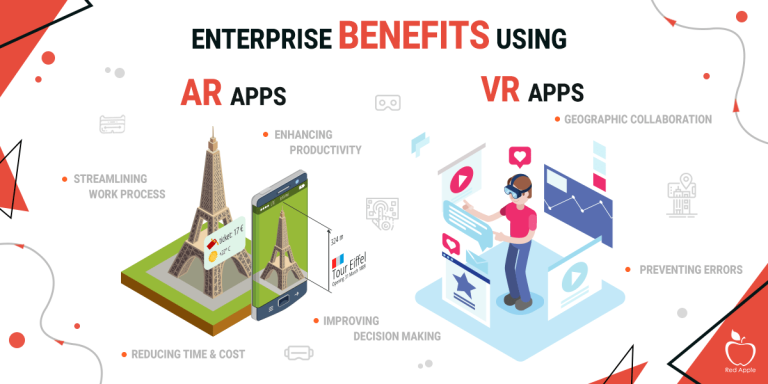
Organizations across industries are adopting AR technology for business because it delivers measurable value in both customer-facing and operational environments.
One of the most significant advantages is enhanced customer engagement. AR experiences encourage users to interact with products and services more actively, resulting in greater attention, stronger brand recall, and improved purchasing confidence.
The technology also supports better decision-making by providing contextual information directly within a user’s field of view. Employees can access real-time instructions, maintenance data, or operational insights without interrupting their workflow.
Training and knowledge transfer become more effective through immersive learning experiences that allow employees to practice procedures within realistic environments. This can reduce training costs while improving knowledge retention and workplace safety.
AR additionally improves collaboration by enabling remote experts to guide field technicians, support teams, or customers through complex processes. As a result, organizations can reduce downtime, increase efficiency, and improve service quality.
The rapid growth of enterprise AR adoption is being driven by its ability to improve productivity, training efficiency, and customer engagement. Industry analysts expect AR investments to expand significantly across sectors such as manufacturing, retail, healthcare, and education as organizations continue their digital transformation initiatives.
For businesses seeking innovation and differentiation, augmented reality solutions provide a powerful way to create memorable experiences while improving operational performance.
Industries Leveraging Augmented Reality Solutions
The versatility of AR has made it one of the most widely adopted emerging technologies across multiple sectors. Businesses are increasingly implementing augmented reality solutions to improve customer experiences, enhance workforce productivity, and create new revenue opportunities.
Retail and E-Commerce
Retailers are using AR to bridge the gap between online and in-store shopping experiences. Virtual try-on features allow customers to see how products such as clothing, eyewear, cosmetics, and accessories will look before making a purchase. Furniture and home décor brands also use AR applications to help shoppers visualize products within their own living spaces.
These experiences reduce uncertainty, increase customer confidence, and often contribute to higher conversion rates and lower product return rates.
Retail has emerged as one of the strongest use cases for AR, with businesses using product visualization, virtual try-ons, and interactive shopping experiences to reduce purchase uncertainty and improve customer confidence. The continued growth of mobile AR platforms is helping accelerate adoption across the retail sector.
Healthcare
Healthcare organizations are leveraging AR for medical training, surgical planning, patient education, and remote assistance. Surgeons can access critical information during procedures, while medical students benefit from immersive learning experiences that improve understanding of complex anatomical structures.
AR also supports telemedicine initiatives by enabling specialists to guide healthcare professionals remotely through diagnostic and treatment procedures.
Education and Training
Educational institutions and corporate training programs are increasingly incorporating AR into their learning environments. Interactive 3D models and immersive simulations help learners understand complex concepts more effectively than traditional teaching methods.
From science laboratories and engineering courses to employee onboarding and compliance training, AR is transforming how knowledge is delivered and retained.
Manufacturing and Industrial Operations
Manufacturers use AR to improve assembly processes, equipment maintenance, quality control, and workforce training. Employees can access real-time instructions and visual guidance directly within their work environments, reducing errors and improving productivity.
Industrial organizations also use AR-enabled remote support systems to connect field technicians with experts who can provide immediate assistance regardless of location.
Real Estate and Architecture
AR has significantly improved property visualization and project planning. Real estate professionals can offer virtual property tours, while architects and developers can present interactive 3D models that help stakeholders understand design concepts before construction begins.
This enhanced visualization capability improves decision-making while reducing costly revisions and misunderstandings.
Gaming and Entertainment
The gaming industry played a major role in popularizing AR among mainstream audiences. Today, entertainment companies continue to use AR to create immersive experiences that blend digital content with real-world environments.
Beyond gaming, AR is increasingly being used in live events, museums, theme parks, and interactive marketing campaigns to create engaging customer experiences.
Popular Examples of AR in Action
The widespread adoption of AR can be seen through several well-known applications that have successfully integrated the technology into everyday experiences.
One of the most recognized examples is Pokémon GO, which introduced millions of users to location-based AR gaming by allowing virtual characters to appear in real-world environments.
IKEA Place enables customers to visualize furniture inside their homes before making purchasing decisions, helping eliminate uncertainty while improving shopping confidence.
Beauty brands such as Sephora have adopted AR-powered virtual try-on experiences that allow customers to experiment with makeup products digitally. Similarly, social media platforms like Snapchat and Instagram have popularized AR filters and interactive effects that encourage user engagement.
Google Maps has also integrated AR through its Live View feature, which overlays navigation directions onto real-world streets, making wayfinding more intuitive and accurate.
These examples demonstrate how AR is moving beyond novelty and becoming an integral part of customer engagement, product visualization, and digital interaction strategies.
Future Trends in Augmented Reality
As computing power, connectivity, and artificial intelligence continue to evolve, the future of AR appears increasingly promising.
One major trend is the growing adoption of wearable AR devices and smart glasses. These technologies have the potential to provide hands-free access to information, making them particularly valuable in industries such as manufacturing, healthcare, logistics, and field services.
Hardware innovation is also accelerating. According to Statista, the consumer and enterprise AR glasses market generated approximately $6.4 billion in revenue during 2024, highlighting growing interest in wearable AR technologies across both consumer and professional environments.
Artificial intelligence is expected to play a larger role in AR experiences by improving object recognition, contextual awareness, personalization, and predictive capabilities. The integration of AI and AR will enable more intelligent and adaptive interactions between users and digital content.
Spatial computing is another rapidly emerging area where digital information becomes seamlessly integrated into physical environments. Businesses are also exploring digital twins, which use real-world data and immersive visualization to optimize operations and improve planning.
Enterprise collaboration environments, remote support systems, and industrial metaverse applications are further expanding the possibilities of AR across professional settings.
As organizations continue their digital transformation journeys, investments in AR technology for business are likely to accelerate, creating new opportunities for innovation across virtually every industry.
Why Businesses Are Investing in Augmented Reality Solutions
The increasing adoption of AR is not simply a response to technological innovation. It reflects a growing demand for tools that can improve efficiency, engagement, and decision-making across business functions.
Modern consumers expect more interactive and personalized experiences when researching products and services. AR helps businesses meet these expectations by enabling customers to visualize products, explore features, and interact with brands in ways traditional experiences cannot.
From an operational perspective, AR improves productivity by delivering real-time information within the user’s environment. Employees can access visual instructions, collaborate remotely, and resolve issues faster without interrupting their workflows.
Businesses also benefit from stronger customer engagement, improved training outcomes, reduced operational costs, and greater process accuracy. These advantages make augmented reality solutions an increasingly valuable investment for organizations pursuing innovation and long-term growth.
As digital transformation continues to accelerate, companies that adopt immersive technologies are often better positioned to differentiate themselves from competitors and respond to evolving customer expectations.
Choosing the Right AR Development Partner
Building successful AR experiences requires expertise across multiple disciplines, including software development, user experience design, 3D modeling, computer vision, artificial intelligence, and cloud infrastructure.
Partnering with an experienced augmented reality development company can help businesses navigate the technical complexities associated with AR implementation while reducing development risks and accelerating time-to-market.
When evaluating potential technology partners, organizations should consider factors like industry experience, technical capabilities, development methodology, scalability expertise, and post-launch support. A strong development partner should also understand how AR aligns with broader business objectives rather than focusing solely on technical execution.
Professional AR app development services typically cover strategy consulting, experience design, application development, testing, deployment, integration, and ongoing optimization. This comprehensive approach helps ensure that AR initiatives deliver measurable business while remaining scalable for future growth.
Many organizations also choose to hire dedicated AR developers when building complex or long-term projects. Dedicated development teams provide specialized expertise, greater flexibility, and continuous support throughout the product lifecycle, allowing businesses to adapt solutions as requirements evolve.
How Red Apple Technologies Supports AR Innovation
We help businesses transform ideas into immersive AR experiences that improve customer engagement, operational efficiency, and digital innovation. Our team works closely with clients to design solutions that align with both immediate business objectives and long-term growth strategies.
We deliver end-to-end AR app development services, covering strategy, user experience design, application development, 3D content integration, testing, deployment, and ongoing support. Whether the objective is to enhance customer engagement, improve workforce training, visualize products, or streamline operations, we build solutions tailored to specific business requirements.
As an experienced augmented reality development company, we combine technical expertise with industry insights to create scalable applications that deliver measurable results. From retail and education to healthcare, manufacturing, and entertainment, our solutions help organizations unlock new opportunities for growth and innovation.
Businesses looking to accelerate AR adoption can also hire dedicated AR developers from our team to support project-specific requirements, ensure continuity in development, and maintain long-term scalability.
[optin-monster slug=”pjo7ihycdshdqiretmeu” followrules=”true”]
Conclusion
Augmented Reality has evolved from an emerging technology into a practical business tool that is reshaping how organizations interact with customers, train employees, and optimize operations. Its ability to blend digital content with real-world environments creates opportunities for deeper engagement, improved efficiency, and more informed decision-making.
From retail and healthcare to manufacturing, education, and real estate, businesses across industries are leveraging AR technology for business to create immersive experiences that drive measurable value. As advancements in artificial intelligence, wearable devices, and spatial computing continue to expand AR capabilities, the technology is expected to play an even greater role in digital transformation initiatives.
Organizations that invest in innovative augmented reality solutions today will be better positioned to enhance customer experiences, improve operational performance, and maintain a competitive advantage in an increasingly digital world. Partnering with the right technology experts can help turn AR from an exciting concept into a scalable business asset that supports long-term growth.
To Have A Better Understanding On This Let us Answer The Following Questions
Answer: Augmented Reality (AR) is a technology that overlays digital content like images, animations, text, and 3D objects onto real-world environments using smartphones, tablets, smart glasses, and other connected devices. Unlike Virtual Reality, AR enhances the existing environment rather than creating a completely virtual one.
Answer: AR technology uses cameras, sensors, GPS, computer vision, and artificial intelligence to analyze a user’s surroundings and place digital elements within the physical environment in real time. This creates interactive and immersive experiences that blend the digital and physical worlds.
Answer: AR technology for business can improve customer engagement, employee training, product visualization, operational efficiency, and remote collaboration. It helps organizations deliver more interactive experiences while improving productivity and decision-making.
Answer: Augmented reality solutions are widely used in retail, e-commerce, healthcare, manufacturing, education, real estate, logistics, automotive, and entertainment. Businesses leverage AR to enhance customer experiences, streamline operations, and improve workforce performance.
Answer: AR app development services include strategy consulting, UI/UX design, 3D asset creation, application development, testing, deployment, maintenance, and optimization. These services help businesses build scalable and engaging augmented reality applications.
Answer: Businesses invest in augmented reality solutions to create immersive customer experiences, improve employee productivity, reduce operational inefficiencies, and gain a competitive advantage in increasingly digital markets.
Answer: The cost of AR application development depends on factors such as feature complexity, platform requirements, 3D modeling needs, integrations, scalability, and development timelines. More advanced applications generally require higher investment levels.
Answer: Many organizations choose to hire dedicated AR developers for complex or long-term projects. Dedicated teams provide specialized expertise, faster development cycles, continuous support, and greater flexibility throughout the project lifecycle.
Answer: When selecting an augmented reality development company, businesses should evaluate technical expertise, industry experience, portfolio quality, development methodology, scalability capabilities, and post-launch support services.
Answer: The future of AR is expected to be driven by advancements in artificial intelligence, smart glasses, spatial computing, digital twins, and enterprise collaboration platforms. As adoption grows, AR will continue to play a major role in digital transformation across industries.
The Author
Related Blogs
Discover more stories & insights that inspire
Remember how travel used to begin the moment you stopped out your door. Well, today it often begins the moment you open an app. Immersive tourism experiences like virtual museum...

Whether it is making strategic decisions, providing employee training, or fulfilling other organizational goals, simulation has evolved as an indispensable tool in global businesses. From Healthcare to Education, Software Development,...
When we were watching television ads about new products, going to the store for shopping, or even when technological advancement sprouted e-commerce where we could buy products online, we didn’t...
From sports competitions to music concerts and corporate gatherings, Augmented Reality (AR) and Virtual Reality (VR) are transforming the experience of watching live events more immersive and engaging. Besides, these...
Over a considerable timespan, investments in next-gen technologies like AR/VR, Blockchain, NFT, and others are scaling up across industries. This is empowering business establishments to fulfill their requirements and goals...
Augmented Reality (AR) made its first full-fledged impact with the arrival of the Pokemon Go game in 2016 where users have to compete with the pokemons in a realistic setting....
As per the market reports by Statista, by 2025, the size of the AR market is expected to reach 1848.9 million dollars. To know more about its real time implications...
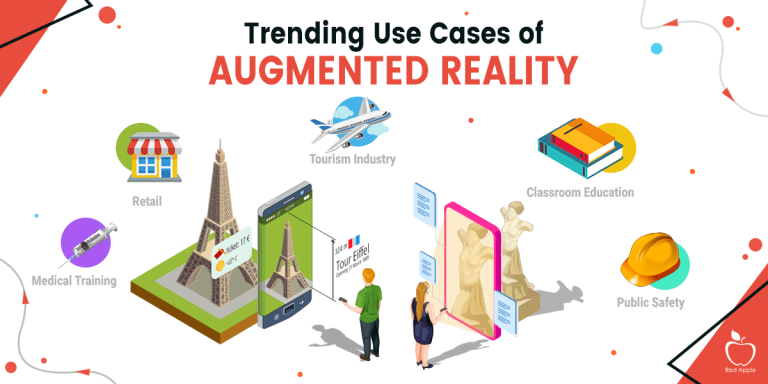
Augmented reality has taken its foundation with its first use case by the US Air force in the year 1992 and since then it has set a mark in its...
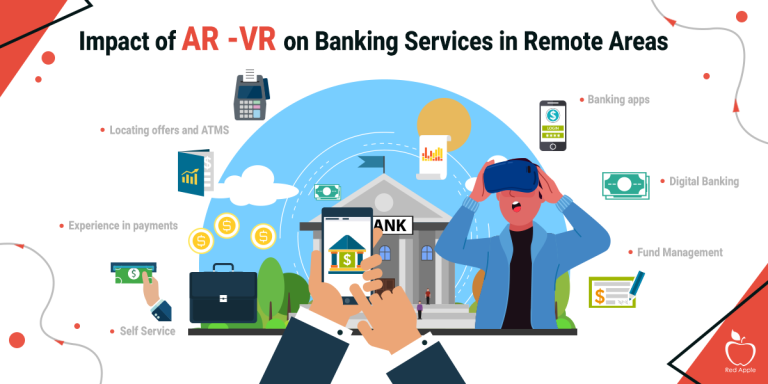
The implications of the latest technologies have impacted various industries and banking is no exception in this regard. The advancements of technologies have made lives comfortable and smooth by enabling...
Technology can be defined as a broad spectrum which covers an unexpected and unimaginable plethora of innovation. The rapid growth of emerging technologies has created an urge of competition among...


 Book An Appointment
 WhatsApp