


Trusted By
Brands, Studios And Businesses Worldwide






FROM GAME REQUEST TO RECORDED OUTCOME
ENGINEER THE SYSTEM
RUNNING BEHIND EVERY GAME
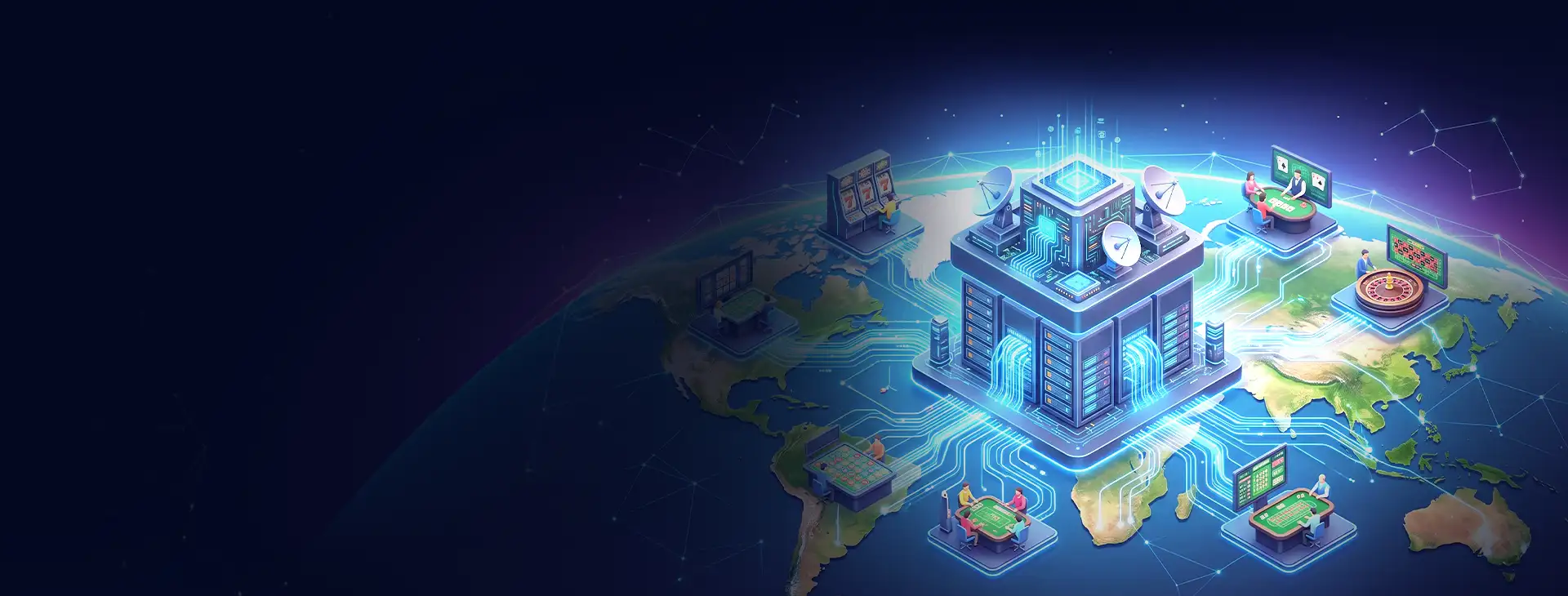
A Remote Game Server (RGS), also referred to across the industry as a Remote Gaming Server, coordinates game logic, sessions, outcomes, transactions, and communication with the surrounding iGaming ecosystem. Those responsibilities are designed as one connected backend around your games, integration model, operational requirements, and deployment environment.
FOUR CORE RGS ENGINEERING AREAS
ARCHITECTED FOR THE REALITIES OF REMOTE GAME DELIVERY
Server-Side
Game Execution
Critical game rules, outcome generation, bonus states, and payout logic remain server-side rather than in the player-facing client.
Red Apple can integrate CSPRNG-based outcome services and keep mathematical models separate from visual assets, supporting new skins or feature releases without exposing critical game logic.


Consistent Transaction &
Wallet Flows
Each round can trigger balance checks, debits, credits, wins, rollbacks, retries, and operator wallet responses. These events must stay synchronized even when networks or downstream services fail.
We use HMAC-SHA256 verification, idempotency controls, automatic rollback handling, and integration patterns that support a sub-300 ms wallet SLA without allowing repeated requests to create duplicate financial events.
Game & Integration
Configurability
One RGS may serve different operators, currencies, jurisdictions, and game variants without forking the backend for every deployment.
Configurable layers can manage ISO 4217 currencies, operator-specific game catalogs, approved RTP profiles, bet settings, and tenant rules while keeping broader platform and back-office responsibilities outside the RGS.

Scalable & Resilient RGS
Infrastructure
Traffic can rise from routine play to thousands of simultaneous sessions or peak casino events without warning. The RGS has to absorb that demand without breaking active rounds or wallet flows.
Red Apple uses containerized deployment, Kubernetes auto-scaling, Redis clustering, database read replicas, and zero-downtime release patterns to support 10,000+ spins per second and 99.99% operational uptime.
WHEN A ROUND DOESN’T END CLEANLY
DESIGN THE RGS TO RECOVER WITHOUT LOSING THE ROUND
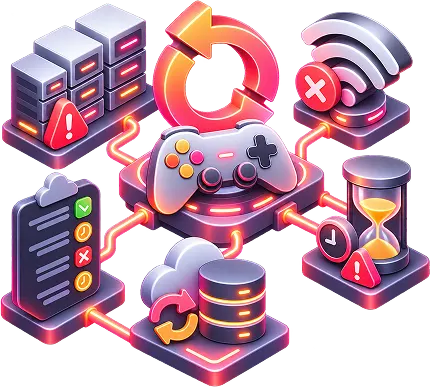
Mobile dropouts, closed browsers, 504 timeouts, or operator delays can interrupt a round after a wager has already entered the server flow. The RGS checkpoints the active state so the unfinished round can be identified rather than recreated.
On reconnection, the saved state can resume the round where it stopped. Idempotency and in-flight locking prevent a repeated request from creating a second debit, while rollback logic handles unconfirmed transactions.
If the player never returns, the server can resolve the round according to the configured market rules and credit any resulting win. This keeps the game record, wallet outcome, and player-facing state aligned.
ENGINEERED TO STAND UP TO REVIEW
BUILD TRACEABILITY INTO THE RGS
FROM THE START
An RGS may need to undergo technical testing, support external certification, and remain auditable as games and software versions change. The underlying records, environments, controls, and configuration points are planned so review requirements do not become a late-stage retrofit.
After The First Game Goes Live
EVOLVE THE RGS WITHOUT
RESETTING THE FOUNDATION
A custom RGS should leave room for new games, integrations, deployment requirements, and technical changes without forcing your portfolio into a fixed server model. Our remote gaming server solution develops for continued evolution so the backend can grow with the products and ecosystems it supports.
Frequently Asked Questions
Custom RGS development cost depends on the game categories, wallet model, operator and aggregator integrations, management tooling, infrastructure, and target jurisdictions. We usually scope the work in milestones, beginning with core RGS architecture, wallet connectivity, and the first game integration before expanding the platform.
The timeline depends on whether you need a new RGS, a wallet integration proxy, modernization work, or certification preparation. Existing game art, math documentation, operator specifications, and cloud decisions can shorten discovery. We sequence the build around testable milestones so a staging environment becomes available before the full roadmap is complete.
Yes. We can modernize individual components rather than force a full rewrite. Typical work includes improving wallet latency, adding idempotency or Redis-based locking, introducing WebSocket services for real-time games, restructuring APIs, or replacing infrastructure while live operations continue.
Yes. Shared services such as authentication, wallet debit and credit, session handling, ledger records, and audit trails can support multiple game engines. One RGS can run video slots, crash and instant-win titles, RNG table games, Mines, Plinko, and other supported formats while game-specific logic remains separated.
Yes. We build adapters for Seamless Wallet and Transfer Wallet models and can connect the RGS with PAM, platform, and aggregation environments. Verified integration experience includes EveryMatrix, SOFTSWISS, Slotegrator, BetConstruct, Hub88, and Pronet Gaming, with HMAC-SHA256 signing and sub-300 ms round-trip targets where required.
No. Formal certification is issued by the applicable regulator or accredited laboratory. We prepare the RGS for that process with controlled test environments, NIST/Dieharder RNG test logs, payout simulation reports, version-lock documentation, source-code packages, and engineering support during external evaluation.
Yes. Red Apple transfers 100% ownership of the agreed deliverables, including source code, mathematical models, and deployment configurations, as defined in the engagement terms. The architecture can run in your chosen environment without proprietary hosting lock-in or recurring per-spin platform royalties.
Useful starting inputs include the game categories, available artwork or math documentation, target operator or aggregator specifications, wallet model, preferred cloud or hosting environment, and any existing backend components. If some decisions are open, architectural discovery can define the roadmap and integration boundaries before development begins.
READY TO BUILD OR
EXTEND YOUR RGS?
Get a reply within 24 hours
Tell us where the project stands today. We'll start there.


 Book An Appointment
 WhatsApp