



ONE GAME, SEVERAL DISCIPLINES
SLOT GAME DEVELOPMENT SERVICES
FROM CONCEPT TO RELEASE
Some projects arrive as an idea, with no more than a theme, a target audience, and a general sense of what the game should feel like. Others already have the math, artwork, a working prototype, or backend systems in place, and only need specific gaps closed before the title can move forward. Our slot game development services can cover the whole production or the specific part your team needs help completing, and the six disciplines below outline where that responsibility can sit.
WHEN ONE CHANGE AFFECTS EVERYTHING
EVERY PART OF A SLOT GAME
MUST WORK TOGETHER
In slot game development, mathematics, mechanics, UX, art, animation, audio, backend systems, integration, and QA all affect the same build. Our slot game development company keeps those disciplines aligned from rule definition through validation, so a change to one part of the game is carried through the systems, presentation, and test coverage it affects. That coordination matters most when features begin crossing several disciplines at once.

MECHANIC
STRUCTURE
Game rules, feature states, triggers, persistence, and transitions are defined against the same logic before implementation moves forward. That gives engineering, mathematics, presentation, and QA a shared reference when base play and bonus mechanics begin interacting.
PAYOUT
BEHAVIOR
RTP, volatility, hit frequency, feature frequency, and prize distribution are developed as parts of the same mathematical model. Those assumptions stay traceable through implementation and simulation, reducing the risk of payout behaviour drifting from the agreed design.

FEATURE
DEPENDENCIES
A wild, multiplier, respin, jackpot, or bonus can change more than one system at once. We map those dependencies across mathematics, game state, UI, animation, audio, backend behaviour, and QA before the feature moves deeper into production.

VISUAL
FEEDBACK
UX, art, animation, and audio are built around the events players need to recognise. Wins, triggers, transitions, and changing states receive clear feedback without letting presentation obscure the rules or interrupt the pace of play.
GAME-STATE
INTEGRITY
Interrupted rounds, reconnects, bonus transitions, and backend responses can expose state issues that normal play misses. We account for those paths so the game can preserve, recover, or resolve the correct state when conditions change without losing progress.

RESPONSIVE
IMPLEMENTATION
Responsive implementation covers more than fitting the reel area onto a smaller screen. Symbols, controls, text, effects, and essential game information are adapted across supported browsers and devices while preserving readability, interaction, and game behaviour.
WHAT THE GAME CAN BECOME
SLOT FORMATS & FEATURE SYSTEMS
From traditional reel structures to feature-led video slots, our slot game development company develops formats and mechanics around the intended mathematics, player flow, visual direction, and target platform.
Traditional reel structures with focused mechanics and clear win presentation.
Feature-led slot formats with layered bonuses, animation, and flexible reel layouts.
Fixed, progressive, or shared jackpots with defined triggers and backend requirements.
Bonus states, multipliers, stacking rules, and reward logic tied to the math model.

Free spins, respins, retriggers, and retained-symbol mechanics built to specification.
Custom substitution, trigger, payout, and visual behaviour aligned with the game rules.
Multi-reel, multi-row, and alternative win structures for more complex game states.
WHAT THE REELS DO NOT SHOW
SLOT MATHEMATICS &
GAME LOGIC
Slot mathematics determines how a game behaves across repeated play, not just its headline RTP. Our slot game development company defines paytables, volatility, hit frequency, feature probability, payout distribution, and bonus contribution as one mathematical system, then carry those rules into game logic, simulation, implementation checks, and release preparation.
RTP & Paytable Design
Agreed RTP targets, reel configuration, symbol values, winning structures, and paytable rules are defined together. This gives engineering a clear mathematical foundation for evaluating wins and keeps payout logic traceable through implementation, simulation, and validation across the wider game model.
Volatility & Hit Frequency
Volatility, hit frequency, prize distribution, and feature frequency shape the statistical character of the game. We model how often outcomes occur, how value is distributed across them, and how those choices influence the intended pace, reward profile, and behaviour of the game across repeated play.
Feature Mathematics
Free spins, respins, multipliers, jackpots, and bonus rounds add their own probability and payout contribution. We model trigger conditions, retriggers, persistent values, reward behaviour, and interactions with the base game so feature mathematics remains aligned with the intended return structure.
SIMULATION & STATISTICAL VALIDATION
Simulation tests whether the implemented model behaves as expected across large sample sizes. We compare theoretical assumptions with observed payout distribution, hit and feature frequency, bonus contribution, and other agreed statistical outputs to identify implementation differences or unintended effects.
When outcomes come from an existing RNG or RGS, validation also checks that the game resolves those outcomes according to the agreed mathematical model and game rules.
When outcomes come from an existing RNG or RGS, validation ensures correct resolution.
Note: Mathematics, game logic, validation, and certification preparation are developed against the agreed game specification and the requirements of the intended target market. Independent certification and regulatory approval remain with the relevant testing body or authority.
WHEN THE ROADMAP GOES BEYOND ONE GAME
SLOT DEVELOPMENT MAY BE ONE PART OF A BIGGER iGAMING BUILD
If the work also reaches into other game formats, platforms, RGS infrastructure, integrations, back-office systems, or specialist production, the wider iGaming scope can be planned around those connections rather than treating each requirement as a separate project.
SEE OUR iGAMING CAPABILITIESBEYOND THE STANDALONE BUILD
SLOT PLATFORM CONNECTIVITY
AND DEPLOYMENT
A slot game does not operate as an isolated browser build. It has to exchange game state, session data, configuration, results, and platform-level information with the systems around it. Our HTML5 slot game development work accounts for those connections from the game client through the RGS and into the target distribution environment.
ECOSYSTEM FLOW
GAME CLIENT
The browser-facing slot handles presentation, controls, feature states, animation, and player feedback while exchanging the information required by the server-side and platform systems behind it.

INTEGRATION INTERFACES
- Game Launch
- Authentication
- Session Management
- Game Configuration
- Wallet / Balance Exchange
- Bet & Result Exchange
- Free-Spin Configuration
- Jackpot Communication
- Game History & Reporting
- Error & Reconnect Handling

RGS &
GAME SERVER
The RGS or game server can manage round logic, configuration, sessions, results, and other server-side responsibilities defined by the target architecture.

EXISTING ARCHITECTURES
Not every online slot game development project starts with a blank technical stack.
Existing RGS infrastructure, APIs, platform specifications, game code, or partially completed integrations can remain in place once their constraints and connection points have been established.

AGGREGATOR & PLATFORM CONNECTIONS
Aggregators and operator platforms can introduce their own launch flows, authentication, configuration, data formats, and integration requirements. These connections are implemented and tested against the environment where the title will actually run.

Selected Game Projects
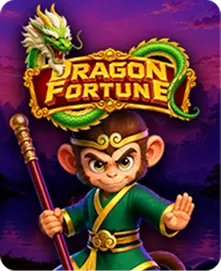
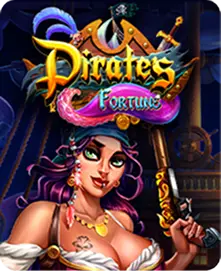
Portfolio For Slots Game
The finished screen tells only part of the story. A useful project example should also show what had to be built, integrated, tested, optimized, or adapted for release.



HOW WE APPROACH SLOT GAME DEVELOPMENT
Production decisions become harder to change once mathematics, engineering, art, and integration are already moving. Our slot game development services resolve the highest-impact questions early, builds against agreed rules and technical requirements, then validates the finished game before it moves toward external review or release.
This reduces rework, exposes technical risks earlier, and gives the team a more reliable path toward final approval and launch.
BEFORE THE GAME MOVES FORWARD
SLOT GAME QA, CERTIFICATION
SUPPORT & RELEASE READINESS
USE THE TEAM THE PROJECT ACTUALLY NEEDS
HOW YOU CAN WORK WITH OUR
SLOT GAME DEVELOPERS
Different projects need different levels of ownership. Red Apple can take responsibility for a defined slot development scope, extend an established production team with dedicated specialists, or work alongside existing product and technical teams through a shared co-development model. The engagement structure follows the work that remains, not a fixed delivery template.
Frequently Asked Questions
For early budgeting, custom slot game development can start around $15,000-$35,000 for a focused title, while more advanced productions with custom mathematics, multiple bonus systems, extensive art and animation, backend work, platform integration, and certification preparation can reach $100,000-$200,000+. Larger or more technically demanding projects may extend beyond that range.
The final cost depends on the mathematical model, mechanic complexity, creative scope, frontend and backend engineering, RGS or platform integration, QA requirements, and how much usable code, artwork, mathematics, or infrastructure already exists.
The timeline depends on what is already defined and how much production the title requires. A focused game using an existing backend and established mathematics can move differently from a title that needs new math, multiple bonus systems, extensive art, RGS work, integration, and external review preparation.
Yes. Development can begin from an existing prototype, codebase, mathematical model, artwork, partially integrated build, or live technical environment. We first establish what can be retained, what needs validation, and where new work has to connect without unnecessarily rebuilding finished parts.
Yes. Art, UI, animation, effects, and related production can be handled as a separate workstream when mathematics, game design, engineering, or backend development are already covered elsewhere. The creative scope is defined against the mechanics and technical requirements it needs to support.
Yes. A multi-title engagement can be structured around a shared roadmap, production standards, reusable technical components, common integration requirements, or a defined series of games. Each title still needs its own mathematics, mechanics, assets, QA coverage, and release requirements where those differ.
For iGaming game development, ownership is established by mutual agreement. Source-code rights, game IP, licensing, asset ownership, commercial rights, and permitted usage are defined before production begins so the commercial structure is clear before development moves forward.
Yes. A project does not need to arrive as a blank brief. Existing mathematics, assets, game code, platform specifications, APIs, or RGS infrastructure can remain part of the production where they are suitable. We validate the relevant dependencies before defining the remaining development scope.
Yes. Where several titles share platform requirements, integration patterns, technical components, or production standards, those common elements can be planned together. Game-specific mathematics, mechanics, creative assets, and validation remain separate where the individual titles require them.
HAVE A SLOT GAME IDEA?
LET’S BUILD IT
Get a reply within 24 hours
Tell us where the project stands today. We'll start there.


 Book An Appointment
 WhatsApp