


Best Game Genres to Invest in for 2026: Revenue Potential, Costs, and Risks
- Home
- /
- Blog
- /
- Game Genres
- /
- Best Game Genres to...
For startups, studios, and enterprises planning to work with a game development company, genre selection is one of the first major business decisions behind a new game. It shapes the production budget, team size, art scope, platform strategy, monetization model, content pipeline, and post-launch support plan.
The opportunity is large, but it is not automatic. Grand View Research projects the global gaming market, a broader figure that includes hardware and adjacent spending, to grow from $367.6 billion in 2026 to $505.2 billion by 2030. Newzoo, whose narrower software-only estimate excludes hardware, put the 2025 games market at $188.8 billion with around 3.6 billion players worldwide, a figure it has since revised upward to $197 billion.
But those numbers do not mean every game idea is commercially sound.
A puzzle game may be cheaper to build than a multiplayer shooter, but it still has to survive a crowded mobile market. A strategy game can keep players engaged for years, but only if the economy, alliances, events, and progression systems are carefully balanced. A battle royale game may look attractive because of its visibility, but it can become expensive very quickly once servers, matchmaking, anti-cheat, performance, live content, and user acquisition enter the picture.
So, here’s what you should ask:
Which game genre fits your budget, audience, platform, monetization plan, LiveOps capacity, and long-term content strategy?
This guide compares the best game genres to invest in for 2026, with a practical look at revenue potential, development complexity, monetization fit, and risk.
Quick Answer: Which Game Genres Have the Strongest Revenue Potential?
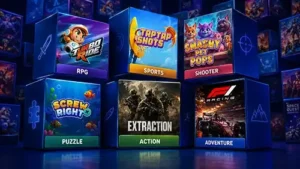
The strongest game genres for revenue potential include strategy, RPG, puzzle, casual, hybrid-casual, simulation, sports, action, and battle royale games. Each one can work, but not under the same business model.
Puzzle and casual games are often more practical for mobile-first studios because they can be tested faster. Strategy and RPG games can support deeper monetization, but they need stronger systems, content, and LiveOps. Battle royale and competitive shooter games can generate high engagement, but they are among the hardest and most expensive genres to build well.
| Game Genre | Revenue Potential | Development Complexity | Best Monetization Fit | Risk Level |
|---|---|---|---|---|
| Strategy | High | High | IAP, battle pass, seasonal events | High |
| RPG / MMORPG | High | High | IAP, premium, subscriptions, battle pass | High |
| Puzzle | High | Medium | Ads, IAP, hybrid monetization | Medium |
| Casual / Hybrid-Casual | Medium-High | Low-Medium | Ads, IAP, rewarded ads | Medium |
| Simulation | Medium-High | Medium-High | Premium, IAP, DLC, subscriptions | Medium |
| Sports | Medium-High | High | Premium, IAP, live events, licensing | High |
| Action | Medium-High | High | Premium, IAP, DLC, cosmetics | High |
| Battle Royale / Shooter | High | Very High | Battle pass, skins, seasons, IAP | Very High |
1. Strategy Games
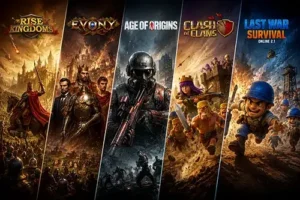
Strategy games are attractive because they give players a reason to return every day. They are not built around a single play session. They are built around progress, planning, competition, upgrades, alliances, and long-term goals.
A good strategy game makes the player feel that something is always moving: a base is upgrading, resources are building, an alliance war is approaching, a leaderboard is shifting, or an event is about to end. That rhythm is what makes the genre powerful for retention.
Popular examples include:
- Clash of Clans
- Rise of Kingdoms
- Age of Origins
- Evony
- Last War: Survival
- Whiteout Survival
Sensor Tower’s State of Gaming 2026 report notes that strategy was the only mobile genre to gain across revenue, downloads, and time spent in 2025, driven by 4X strategy titles such as Last War: Survival and Whiteout Survival.
Why strategy games are worth considering
Strategy games can monetize through speed-ups, resources, heroes, skins, boosters, event packs, VIP systems, battle passes, and alliance-driven competition. Players usually spend because they want momentum, status, access, or an advantage in time-sensitive events.
The genre can work especially well when the game includes:
- Base-building or territory control
- PvP and PvE loops
- Alliances or guilds
- Time-limited events
- Resource economies
- Seasonal rankings
- Progression systems
- Strong backend support
What can go wrong
Strategy games are economy-sensitive. If paying players become too powerful, non-paying players may leave. If progression is too slow, early retention drops. If events feel repetitive, even loyal players stop caring.
This genre is best suited for teams that can handle game economy design, backend development, multiplayer systems, LiveOps planning, and regular balance updates.
2. Role-Playing Games and MMORPGs

RPGs work because players become attached to characters, worlds, choices, combat systems, gear, quests, and progression. A strong RPG gives the player a reason to keep building toward something: a better character, a stronger team, a new skill, a harder boss, or the next chapter of the story.
The genre can take many forms: premium PC/console RPGs, mobile RPGs, gacha RPGs, action RPGs, tactical RPGs, and MMORPGs.
Popular examples include:
- Baldur’s Gate 3
- Elden Ring
- Cyberpunk 2077
- World of Warcraft
- Genshin Impact
- Destiny 2
Why RPGs can generate strong revenue
RPGs support monetization because they create emotional and mechanical investment. Players may pay for expansions, cosmetics, battle passes, subscriptions, character banners, equipment, convenience, or premium content when they already care about the world and progression.
The genre has room for both premium and live-service models. A smaller RPG may focus on paid sales and DLC. A mobile RPG may rely on events, characters, upgrades, and limited-time content.
What can go wrong
RPGs are not cheap content machines. They need narrative design, combat systems, character art, animation, UI/UX, level design, quest design, QA, balancing, and often backend systems.
The major risks are:
- High content cost
- Long production timelines
- Weak story pacing
- Repetitive grinding
- Poor economy balance
- Monetization that feels unfair
An RPG can be a strong investment, but the scope has to be honest. A focused RPG with a clear loop is usually safer than an oversized world that the team cannot support.
3. Puzzle Games
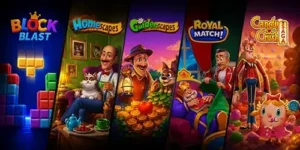
Puzzle games remain one of the most practical genres for mobile. They are easy to understand, quick to play, and suitable for repeat sessions throughout the day.
The best puzzle games do not feel complicated at the start. They let players understand the goal quickly, then gradually introduce challenge, tension, mastery, and rewards.
Popular examples include:
- Candy Crush Saga
- Royal Match
- Gardenscapes
- Homescapes
- Block Blast
Why puzzle games still have revenue potential
Puzzle games work well with ads, rewarded ads, boosters, extra moves, lives, daily rewards, level races, team events, and seasonal content.
According to Sensor Tower, mobile games generated $82 billion in global in-app purchase revenue in 2024. The same report notes that games using hybrid monetization, combining IAPs and advertising, saw 37% year-over-year growth in IAP revenue.
For puzzle games, the real business value often comes from the long tail. If players keep returning, the game can monetize through a mix of rewarded ads, IAPs, events, and level-based friction.
What can go wrong
Puzzle games look simple from the outside, but they are hard to scale. The first few levels are not the real challenge. The real challenge is building hundreds or thousands of levels without breaking the difficulty curve.
Common problems include:
- Repetitive mechanics
- Poor level pacing
- Aggressive monetization
- Weak event design
- Limited differentiation
- Low Day 7 and Day 30 retention
A new puzzle game needs a distinct mechanic, a sharper theme, better progression, or a stronger social/event layer to stand out.
4. Casual and Hybrid-Casual Games
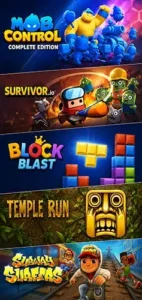
Casual games are built around simple controls, short sessions, and easy entry. Hybrid-casual games go a step further by adding progression, upgrades, collections, missions, or light strategy to that simple base.
This category is attractive because it lets teams test ideas faster than many mid-core genres. But fast prototyping does not mean easy success.
Popular examples include:
- Subway Surfers
- Temple Run
- Block Blast
- Survivor.io
- Mob Control
Why casual and hybrid-casual games are attractive
Casual games can work well for mobile-first startups, publishers, and brands because they usually do not require the same production load as RPGs, shooters, or simulation games.
Hybrid-casual is especially useful because it allows the game to earn from both ads and in-app purchases. This makes the model practical when the core gameplay is simple enough to enter quickly but deep enough to support progression, upgrades, collections, and repeat sessions.
What can go wrong
Casual games are easy to download and easy to delete. If the first session is weak, players leave. If ads appear too early or too often, players leave. If progression feels empty, players leave.
A casual or hybrid-casual game needs:
- A strong first 60 seconds
- Clear controls
- Fast feedback
- Visible progression
- Rewarded ads that feel optional
- Frequent testing
- Fast iteration
This is often a good starting genre for smaller teams, but it still needs serious product discipline.
5. Simulation Games
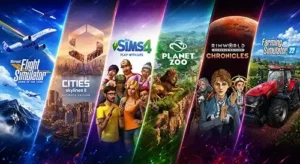
Simulation games attract players who enjoy systems, creativity, realism, control, planning, or mastery. They may involve cities, vehicles, farms, businesses, aviation, life systems, factories, sports management, or real-world activities.
A good simulation game gives players the pleasure of understanding how a system works and then shaping it.
Popular examples include:
- Microsoft Flight Simulator
- Cities: Skylines II
- The Sims 4
- Planet Zoo
- RimWorld
- Farming Simulator
Why simulation games can work commercially
Simulation games can serve focused audiences very well. They do not always need the largest market if they give a specific community something deep, useful, or highly replayable.
The genre can support:
- Premium sales
- DLC
- Expansion packs
- Scenario packs
- Creator tools
- Subscriptions
- In-app purchases
- Mod-friendly ecosystems
Simulation games are especially strong when players feel ownership over what they build, manage, or improve.
What can go wrong
Simulation games are vulnerable to scope creep. A small idea can quickly become a large system with AI behavior, physics, complex UI, economy loops, tutorials, performance challenges, and heavy QA.
The common risks are:
- Confusing interfaces
- Weak onboarding
- Too many systems too early
- Technical performance issues
- Expensive content expansion
- Niche communities with high expectations
Simulation is a good investment when the concept is focused, and the team understands exactly what the target players want to simulate.
6. Sports Games

Sports games benefit from familiarity. Players already understand competition, rules, teams, seasons, rankings, and performance improvement. That gives the genre a natural engagement base.
Sports games can be realistic, arcade-style, management-led, card-based, fantasy-driven, or mobile-first.
Popular examples include:
- Madden NFL
- NBA 2K
- F1 24
- EA Sports FC
- Golf Clash
Why sports games can work
Sports games can connect with real-world calendars, tournaments, player cards, squad-building systems, live events, and seasonal updates. They can work across mobile, console, and PC depending on the scope.
A sports game can monetize through:
- Premium purchase
- Player cards
- Cosmetics
- Tournament entries
- Seasonal passes
- Team upgrades
- Live event content
What can go wrong
Licensing is the biggest issue. Official teams, players, leagues, kits, stadiums, or tournaments can add cost and legal complexity.
Even without licensing, sports games need good animation, responsive controls, physics, clear feedback, and fair competition. A sports game with weak feel will struggle, even if the concept is strong.
A practical sports game usually needs a sharp angle: arcade controls, fantasy sports mechanics, regional sports, management systems, stylized play, or short-session multiplayer.
7. Action Games
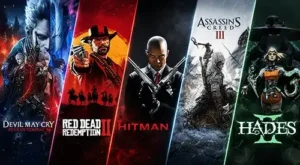
Action games depend on feel. Players know quickly whether movement, combat, timing, animation, camera, and feedback feel right.
This genre can range from compact 2D action games to large open-world premium titles. That range matters because the cost difference can be huge.
Popular examples include:
- Assassin’s Creed
- Hitman
- Red Dead Redemption 2
- Devil May Cry
- Hades
Why action games can work
Action games can create immediate engagement. They can also work across different business models: premium sales, DLC, cosmetics, upgrades, battle passes, or expansion content.
A focused action game can be commercially practical when it has:
- Responsive controls
- A satisfying core loop
- Clear enemy design
- Good level pacing
- Strong performance
- Visual clarity
- Replay value
What can go wrong
Action games punish poor execution. Bad camera behavior, weak controls, unreliable hit detection, low frame rate, or uneven difficulty can damage the experience quickly.
Before choosing action as a genre, the team should define the camera style, combat loop, art scope, platform, enemy variety, performance target, and content plan. Otherwise, the project can expand faster than the budget.
8. Battle Royale and Competitive Shooter Games
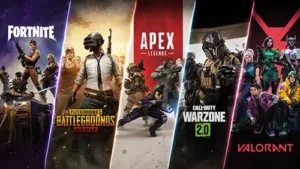
Battle royale and competitive shooter games can generate high engagement because they combine skill, survival, competition, cosmetics, rankings, social play, and seasonal content.
They are also some of the hardest games to build and operate.
Popular examples include:
- Fortnite
- PUBG
- Apex Legends
- Call of Duty: Warzone
- Valorant
Why battle royale and shooter games can work
Competitive shooters are highly replayable when the core loop is strong. Players return for ranked play, new maps, new weapons, team play, skins, battle passes, and limited-time modes.
Sensor Tower’s 2026 gaming report says games drove 52 billion downloads in 2025, with mobile game IAP revenue at about $82 billion and premium revenue on Steam at $12 billion. The report also highlights Battlefield 6 as the best-selling PC/console game of 2025 in a strong year for shooters.
What can go wrong
A battle royale game is not just a combat prototype. It may need:
- Dedicated servers
- Matchmaking
- Anti-cheat systems
- Real-time multiplayer performance
- Cross-platform support
- Weapon balancing
- Map design
- Ranked systems
- LiveOps
- Community support
- Strong user acquisition
This is rarely the safest first project for a small team. A narrower competitive multiplayer game may be more realistic than a full battle royale product.
What Makes a Game Genre Worth Investing In?
A game genre is worth investing in when the creative idea, audience, platform, budget, monetization, and operating model support each other.
1. Audience Demand
The chosen genre should have a clear audience. That does not always mean the largest possible audience. A smaller, loyal audience can sometimes be better than a broad audience with poor retention.
Before selecting a genre, evaluate:
- Target player age group
- Preferred platform
- Session length
- Spending behavior
- Regional demand
- Competitor quality
- Community activity
- Market saturation
2. Monetization Fit
Game monetization by genre varies widely, and each genre earns differently. A rewarded ad may feel natural in a puzzle game but disruptive in a premium action game. A battle pass may fit a shooter but feel forced in a small narrative puzzle title.
| Genre | Ads | In-App Purchases | Premium | Subscription | Battle Pass |
|---|---|---|---|---|---|
| Puzzle | High | Medium | Low | Low | Medium |
| Casual | High | Medium | Low | Low | Low-Medium |
| Strategy | Medium | High | Low | Low-Medium | High |
| RPG | Low-Medium | High | Medium | Medium | High |
| Simulation | Low-Medium | Medium | High | Medium | Low-Medium |
| Sports | Low-Medium | High | Medium | Medium | High |
| Action | Low | Medium | High | Low-Medium | Medium |
| Battle Royale | Low | High | Low | Low-Medium | High |
A player should feel that spending helps them progress, express themselves, save time, compete, or access content. They should not feel that the game has been slowed down just to force a purchase.
3. LiveOps Readiness
LiveOps matters for games that depend on long-term engagement. Unity describes LiveOps services as tools that help teams boost engagement, improve iteration speed, and gain insight into games and players after launch.
| Genre | LiveOps Suitability | Effective LiveOps Strategies |
|---|---|---|
| Strategy | Excellent | Alliance events, war events, leaderboards, resource rushes |
| RPG / MMORPG | Excellent | Character banners, story chapters, raids, collaborations |
| Battle Royale | Excellent | Seasons, battle passes, maps, skins, limited-time modes |
| Puzzle | Excellent | Level races, team tournaments, seasonal levels, daily rewards |
| Sports | Very Good | Real-world events, player-card updates, tournaments |
| Simulation | Very Good | Limited-time challenges, new scenarios, expansion packs |
| Casual | Good | Daily missions, rewarded events, progression boosts |
LiveOps should be planned before launch. A retention-led game needs event calendars, content updates, economy tuning, segmentation, analytics, and response plans for player feedback.
4. Development Cost and Timeline
Game development cost by genre is one of the biggest filters in genre selection. The table below provides indicative Red Apple Technologies planning estimates for outsourced or hybrid development. Final costs depend on platform, art style, gameplay complexity, multiplayer architecture, backend requirements, content volume, IP/licensing, QA, compliance, and post-launch support.
| Game Genre | Indicative Development Cost | Indicative Timeline |
|---|---|---|
| Casual | $15,000–$90,000 | 2–6 months |
| Puzzle | $20,000–$120,000 | 2–7 months |
| Action | $30,000–$300,000 | 3–12 months |
| Strategy | $50,000–$600,000 | 4–18 months |
| Simulation | $50,000–$650,000 | 4–18 months |
| Sports | $60,000–$800,000 | 4–18 months |
| RPG | $80,000–$1.2 million | 5–30 months |
| Battle Royale / Shooter | $150,000–$3 million+ | 6–30 months+ |
These estimates are useful for early planning, especially when comparing in-house production with outsourced or full-cycle game development services. A polished multiplayer shooter, large RPG, licensed sports game, or cross-platform title can exceed these ranges depending on scope.
Red Apple Technologies provides full-cycle game development services across mobile, PC, console, web, and AR/VR, including planning, design, engineering, game art, QA, backend, porting, and LiveOps support.
5. Platform Strategy
Genre and platform should be decided together.
A puzzle game may work best on mobile because of short sessions, simple controls, ad monetization, and fast content updates. A simulation game may be better suited to PC if it needs long sessions, complex controls, and expansion packs. A competitive shooter may need cross-platform planning, server infrastructure, and input balancing across controller, keyboard, and touch.
Before production begins, decide whether the game is meant for:
- Mobile
- PC
- Console
- Web
- Cross-platform release
- AR/VR or location-based gameplay
- Cloud-enabled play
Cross-platform development can broaden reach, but it also increases complexity across QA, UX, performance, input, backend, and release management.
Emerging Game Genre Opportunities for 2026 and Beyond
1. Hybrid-Casual Games
Hybrid-casual games are one of the most practical mobile opportunities because they combine simple gameplay with deeper retention and monetization systems.
This model works when the game is easy to enter but has enough depth to keep players returning. It can work well for casual shooters, merge games, idle games, survival-lite games, puzzle hybrids, and upgrade-based games.
2. 4X and Mid-Core Strategy
The renewed performance of 4X strategy makes it important for teams evaluating mobile game genres. Sensor Tower reports that strategy saw major 2025 gains across key mobile metrics, driven by 4X strategy titles.
However, 4X is not a lightweight genre. It needs economy design, map systems, alliances, long-term progression, live events, backend stability, and careful balancing.
3. Social and Multiplayer Games
Social systems can improve retention when they give players a reason to return. Guilds, co-op missions, leaderboards, gifting, trading, chat, raids, and tournaments can extend the experience beyond the core gameplay loop.
But social features also require safety systems, moderation, reporting flows, matchmaking, and community management. They should support the game design, not sit on top of it as a forced feature.
4. Location-Based and AR Games
Location-based and AR games can connect digital play with physical movement, local discovery, real-world events, fitness, education, tourism, and branded engagement.
These games can be memorable, but they need careful planning around privacy, location accuracy, accessibility, battery usage, outdoor visibility, and player safety.
Biggest Revenue Risks Across Game Genres
1. Market Saturation
A popular genre is often a crowded genre. Puzzle, casual, shooter, and strategy games all face strong competition. If a game repeats the same mechanics, themes, progression systems, and monetization loops as existing titles, it will struggle to stand out.
Better art alone is rarely enough. The game needs a stronger hook, better retention loop, clearer audience fit, or more efficient production strategy.
2. Poor Gameplay Balance
Players leave when a game feels unfair, repetitive, too easy, too punishing, or too slow. Balance affects retention, monetization, reviews, and long-term revenue.
This matters especially in:
- Strategy games
- RPGs
- Puzzle games
- Sports games
- Shooters
- Competitive multiplayer games
Balance should be tested through prototypes, soft launches, analytics, player feedback, and regular tuning.
3. Content-Production Pressure
Many revenue-driven games need fresh content after launch. That may include levels, maps, characters, missions, cosmetics, events, enemies, story chapters, items, or challenges.
A studio should not choose a content-heavy genre unless it can support the pipeline. If players consume content faster than the team can produce it, retention will suffer.
4. High User-Acquisition Costs
Even a strong game can struggle if it cannot acquire players profitably. Mobile launches often need ASO, paid acquisition, creative testing, influencer outreach, community building, and store-page optimization.
Google Play Console supports store listing experiments to test graphics and localized text with the goal of improving installs and retention. Apple also allows product page optimization and custom product pages on the App Store.
Before investing heavily, teams should estimate:
- Cost per install
- Day 1 retention
- Day 7 retention
- Day 30 retention
- Average revenue per daily active user
- Lifetime value
- Payback period
- Organic discovery potential
5. Weak Post-Launch Analytics
A game cannot be improved properly if the team does not know where players drop, spend, return, or churn. Unity Analytics includes dashboards for metrics such as Daily Active Users, session length, player activity, and new users.
At minimum, teams should track:
- DAU
- MAU
- Day 1 retention
- Day 7 retention
- Day 30 retention
- Churn rate
- Average session length
- ARPDAU
- ARPPU
- Conversion rate
- CPI
- LTV
Without these numbers, genre strategy becomes guesswork.
Which Game Genre Should You Choose?
There is no single best game genre for every business.
Choose casual or puzzle if you want a mobile-first game with shorter development cycles, simple onboarding, and broad reach.
Choose strategy if you can support deep progression, LiveOps, social competition, backend systems, and economy balancing.
Choose RPG if you have the budget for characters, art, story, combat, progression, and regular content.
Choose simulation if the idea serves a focused audience that values depth, realism, systems, or creativity.
Choose sports if the concept has a distinct angle, seasonal relevance, or access to licensing and community interest.
Choose battle royale or shooter only if you have the budget, backend capability, multiplayer expertise, LiveOps team, and user-acquisition plan to compete.
Choose hybrid-casual if you want a practical mobile opportunity that combines simple gameplay with deeper retention and monetization.
Final Thoughts
The best game genre to invest in is not always the one with the largest audience or the highest market figure. It is the one that fits your budget, production capability, player behavior, platform choice, monetization model, content pipeline, and post-launch operating plan.
A high-revenue genre can still fail if the gameplay loop is weak, the economy is unbalanced, the content pipeline is too expensive, or user acquisition costs more than the game can recover.
Before choosing a game development company, teams should be clear about genre fit, platform scope, budget, monetization, and post-launch content needs.
At Red Apple Technologies, the practical starting point is to check whether the genre, platform, production scope, monetization plan, and post-launch roadmap make sense together before full production begins. That helps teams avoid overbuilding, underbudgeting, or choosing a genre that looks attractive on paper but is difficult to sustain after launch.
The Author

Related Blogs
Discover more stories & insights that inspire


 Book An Appointment
 WhatsApp