


- Blog
- >
- Mobile App Development
- >
- How eCommerce Mobile Apps...
How eCommerce Mobile Apps Influence Consumer Behavior and Drive Business Growth
(Updated: 6.15.2026)
Consumer expectations have changed dramatically over the last decade. Today’s shoppers no longer want to browse through multiple web pages, fill out lengthy forms, or spend time navigating complicated checkout processes. They expect speed, convenience, personalization, and seamless experiences across every touchpoint.
Industry data from Statista shows that mobile commerce is expected to contribute approximately 63% of total retail eCommerce sales worldwide in the coming years. This growth reflects a clear consumer preference for browsing and purchasing products through mobile devices rather than traditional desktop platforms.
This shift in consumer expectations has fueled the rapid growth of mobile commerce. According to industry reports, mobile devices now account for the majority of global eCommerce traffic, and mobile commerce is projected to contribute a significant share of total online retail sales in the coming years. As smartphones become the primary shopping device for millions of consumers worldwide, businesses are increasingly investing in mobile-first experiences to remain competitive.
What makes this transformation particularly interesting is that mobile apps do more than simply provide another shopping channel. They actively shape how consumers discover products, compare options, make purchasing decisions, and engage with brands over time.
This is one of the key reasons why businesses across retail, fashion, grocery, healthcare, and lifestyle sectors are partnering with an eCommerce app development company to create personalized shopping experiences that strengthen customer relationships and drive revenue growth.
The Rise of Mobile Commerce
The growth of mobile commerce reflects a fundamental change in shopping behavior. Consumers increasingly prefer browsing products, comparing prices, reading reviews, and completing purchases directly from their smartphones. The convenience of having a digital storefront available at any moment has transformed mobile devices into powerful shopping tools.
Several factors have accelerated this trend:
- Widespread smartphone adoption
- Improved mobile internet connectivity
- Secure digital payment systems
- Growth of mobile wallets
- Personalized shopping experiences
- Faster checkout processes
As a result, businesses are moving beyond traditional websites and investing in eCommerce mobile app development services that offer greater engagement, stronger retention, and improved customer experiences.
Unlike websites, mobile applications create a direct connection between brands and customers. They eliminate many of the barriers associated with web-based shopping while providing businesses with valuable insights into consumer preferences and purchasing patterns.
Why Consumers Prefer Shopping Apps Over Websites
When given a choice between a mobile website and a dedicated shopping application, many consumers gravitate toward apps. The reasons extend beyond convenience.
Mobile apps are designed specifically for smartphones, resulting in smoother navigation, faster loading times, and more intuitive user experiences. Features like saved preferences, personalized recommendations, wishlists, and one-tap checkout create a frictionless shopping journey that websites often struggle to replicate.
Consumers also appreciate the continuity that apps provide. Their browsing history, shopping carts, payment information, and preferences remain readily available, reducing the effort required to complete future purchases.
For businesses, these advantages translate into stronger customer engagement. Modern online shopping app solutions are designed not only to facilitate transactions but also to encourage repeat visits and long-term customer loyalty.
The easier it becomes for consumers to browse and purchase products, the more likely they are to return.
How eCommerce Apps Influence Buying Decisions
Every interaction within a shopping app has the potential to influence purchasing behavior. From the products displayed on the home screen to the timing of promotional notifications, mobile apps are carefully designed to guide users through the buying journey.
Personalized Product Recommendations
Consumers are more likely to engage with products that align with their interests and previous shopping behavior. Advanced recommendation engines analyze browsing history, purchase patterns, and user preferences to present highly relevant suggestions. These personalized experiences reduce decision fatigue while increasing the likelihood of additional purchases.
Rather than searching through hundreds of products, users are presented with options that match their needs, making the shopping experience faster and more enjoyable.
Social Proof and Customer Reviews
Consumers rarely make purchasing decisions in isolation. Ratings, reviews, testimonials, and user-generated content provide reassurance and influence buying behavior. Shopping apps make this information easily accessible, helping users evaluate products with greater confidence. Positive reviews often reduce hesitation and encourage faster purchasing decisions.
Push Notifications and Real-Time Engagement
Push notifications have become one of the most effective customer engagement tools available to retailers.
Whether announcing a flash sale, price drop, restocked item, or personalized offer, timely notifications can bring customers back into the app and encourage immediate action.
When used strategically, they help brands remain visible without requiring consumers to actively seek them out.
Frictionless Checkout Experiences
A lengthy checkout process remains one of the leading causes of cart abandonment. Mobile apps simplify this process through features like saved payment methods, biometric authentication, mobile wallets, and one-click purchasing.
By removing unnecessary steps, businesses can significantly improve conversion rates and create a more satisfying customer experience.
Key Ways Mobile Apps Change Consumer Behavior
The influence of eCommerce apps extends far beyond convenience. Over time, they reshape how consumers interact with brands, evaluate products, and make purchasing decisions.
Increased Purchase Frequency
Traditional online shopping often begins with a specific need. Mobile apps, however, create continuous engagement opportunities.
Personalized recommendations, exclusive offers, and timely notifications encourage users to revisit the app regularly. The more frequently customers interact with a brand, the greater the likelihood of repeat purchases. This consistent engagement helps transform occasional buyers into loyal customers.
Faster Decision-Making
Consumers today are exposed to an overwhelming number of choices. Shopping apps simplify decision-making by presenting relevant products, reviews, ratings, and recommendations within a single interface.
Instead of spending time comparing options across multiple websites, users can evaluate products and complete purchases within minutes. The result is a faster and more efficient buying journey.
Stronger Brand Loyalty
Successful eCommerce apps create personalized experiences that make customers feel valued. Loyalty programs, reward points, exclusive discounts, and member-only offers encourage users to continue engaging with the brand. Over time, these initiatives strengthen customer relationships and increase retention rates.
For many businesses, customer retention delivers greater long-term value than constantly acquiring new customers.
Impulse Purchases and Micro-Moments
Mobile devices have created countless opportunities for spontaneous shopping. Whether a consumer receives a limited-time discount notification during a lunch break or discovers a recommended product while browsing, mobile apps make it easy to act immediately.
Features like one-click purchasing and digital wallets reduce friction, allowing users to complete transactions before interest fades. While impulse purchases are not the primary goal of every retailer, they often contribute significantly to overall revenue growth.
The Role of AI and Personalization in Mobile Commerce
Personalization has become a key driver of consumer engagement. According to various retail industry studies, shoppers are more likely to interact with brands that provide relevant product recommendations and tailored shopping experiences based on individual preferences and behavior.
Artificial intelligence is transforming how brands engage with consumers. Modern eCommerce app development services increasingly incorporate AI-powered technologies that analyze user behavior, predict preferences, and deliver highly personalized experiences.
Instead of presenting the same products to every customer, AI helps retailers tailor recommendations based on browsing history, purchase patterns, demographics, and engagement levels.
Some common applications include:
- Personalized product recommendations
- Predictive search functionality
- Dynamic pricing strategies
- Customer segmentation
- Automation marketing campaigns
- Intelligent chat support
These capabilities allow businesses to deliver more relevant shopping experiences while improving customer satisfaction. As competition in digital commerce continues to intensify, personalization has become one of the most important differentiators for brands seeking long-term growth.
Business Benefits of Investing in eCommerce Mobile Apps
While mobile apps enhance customer experiences, they also deliver substantial business advantages. One of the most significant benefits is improved customer retention. Unlike websites, mobile apps maintain a persistent presence on the user’s device, increasing brand visibility and encouraging repeat engagement.
Businesses also gain access to valuable customer insights that can be used to optimize marketing campaigns, product offerings, and customer experiences. Additional benefits include:
- Higher conversion rates
- Improved customer retention
- Better customer engagement
- Increased average order value
- More effective marketing communication
- Enhanced brand recognition
For organizations seeking sustainable growth, investing in online shopping app solutions often provides measurable returns across multiple areas of the business.
Essential Features of Modern Shopping Apps
Consumer expectations continue to evolve, and businesses must adapt accordingly. Successful retail app development projects typically incorporate features that improve usability, convenience, and engagement. Some of the most valuable features include:
Personalized Recommendations
AI-driven product suggestions help customers discover relevant products more quickly.
Secure Payment Integration
Support for multiple payment options improves convenience and builds trust.
Real-Time Order Tracking
Customers appreciate visibility into their purchases from checkout to delivery.
Wishlists and Saved Items
These features encourage future purchases and improve customer retention.
Loyalty and Rewards Programs
Reward-based engagement strategies help strengthen long-term customer relationships.
Push Notifications
Personalized notifications support re-engagement and promotional campaigns.
Customer Support Integration
In-app support improves user satisfaction and resolves issues more efficiently.
As consumer expectations continue to rise, businesses must ensure their applications deliver both functionality and exceptional user experiences.
Why Businesses Are Investing in Online Shopping App Solutions
Consumer behavior is becoming increasingly mobile-first, and businesses are adapting their strategies accordingly. Today’s customers expect personalized recommendations, seamless navigation, flexible payment options, and instant access to products and services. Meeting these expectations through a mobile website alone can be challenging, particularly as competition intensifies across the retail sector.
This is why businesses of all sizes, from startups and direct-to-consumer brands to established retailers, are investing in online shopping app solutions. Mobile applications provide a dedicated channel for customer engagement while enabling businesses to gather valuable insights into purchasing behavior, product preferences, and shipping patterns.
Beyond driving sales, mobile apps help organizations strengthen customer relationships, improve retention rates, and create memorable brand experiences. As consumer expectations continue to evolve, mobile commerce is increasingly becoming a strategic business asset rather than simply an additional sales channel.
Choosing the Right Development Partner
Building a successful shopping application requires far more than attractive design and basic functionality.
Modern eCommerce apps must deliver exceptional user experiences while supporting scalability, security, personalization, payment integrations, inventory management, and data analytics. Achieving this balance requires both technical expertise and a deep understanding of consumer behavior.
Businesses evaluating development partners should consider factors like industry experience, technical capabilities, development methodology, post-launch support, and portfolio quality. The ability to understand customer expectations and translate them into meaningful digital experiences is often what separates successful applications from those that struggle to gain traction.
Many organizations also choose to hire dedicated eCommerce developers when building complex or large-scale applications. Dedicated teams offer specialized expertise, greater development flexibility, and focused attention throughout the project lifecycle, helping businesses accelerate development while maintaining quality standards.
How Red Apple Technologies Helps Businesses Build Engaging eCommerce Apps
We understand that successful eCommerce applications are built around customer behavior, not just technology.
As an experienced eCommerce app development company, we help businesses create intuitive, scalable, and feature-rich mobile applications that enhance customer engagement and support long-term growth. Our development approach focuses on understanding how users interact with digital storefronts and translating those insights into seamless shopping experiences.
From personalized recommendation engines and secure payment integrations to loyalty programs and advanced analytics, our team delivers comprehensive mobile app development services tailored to specific business objectives.
Whether you’re launching a new retail platform, modernizing an existing shopping experience, or exploring innovative retail app development opportunities, we help transform ideas into high-performing digital solutions that deliver measurable business value.
Conclusion
The influence of eCommerce mobile apps extends far beyond convenience. They shape how consumers discover products, evaluate options, make purchasing decisions, and build relationships with brands.
Through personalized experiences, intelligent recommendations, frictionless checkout processes, and ongoing customer engagement, mobile applications have fundamentally transformed modern shopping behavior. Businesses that understand these behavioral shifts are better positioned to attract customers, increase retention, and drive sustainable growth.
As mobile commerce continues to evolve, organizations that invest in customer-centric digital experiences will gain a significant competitive advantage. Partnering with the right eCommerce app development company can help businesses create innovative shopping solutions that not only meet changing consumer expectations but also contribute to long-term success in an increasingly digital marketplace.
To Have A Better Understanding On This Let us Answer The Following Questions
Answer: eCommerce mobile apps influence consumer behavior by making shopping faster, more personalized, and more convenient. Features like product recommendations, push notifications, loyalty programs, and one-click checkout encourage users to engage more frequently and make purchasing decisions with greater confidence.
Answer: Consumers often prefer shopping apps because they offer faster performance, personalized experiences, secure payment options, saved preferences, and easier navigation. These features create a smoother shopping journey compared to traditional mobile websites.
Answer: eCommerce mobile app development services help businesses improve customer engagement, increase conversion rates, strengthen brand loyalty, enhance customer retention, and generate valuable insights into consumer behavior. Mobile apps also provide direct communication channels through push notifications and personalized offers.
Answer: Personalized recommendations use customer data, browsing history, and purchasing patterns to suggest relevant products. This helps shoppers discover products more quickly, improves customer satisfaction, and often increases average order value.
Answer: A successful eCommerce app should include personalized product recommendations, secure payment gateways, real-time order tracking, wishlists, push notifications, loyalty programs, customer reviews, and intuitive navigation. These features contribute to a seamless shopping experience and higher customer retention.
Answer: Businesses are investing in online shopping app solutions because consumers increasingly prefer mobile-first shopping experiences. Mobile apps help companies improve customer engagement, increase sales opportunities, gather behavioral insights, and build stronger long-term relationships with their customers.
Answer: Artificial intelligence helps eCommerce apps deliver personalized shopping experiences through product recommendations, predictive search, customer segmentation, automated support, and targeted marketing campaigns. These capabilities improve user engagement and conversion rates.
Answer: Retail app development focuses on creating engaging and user-friendly shopping experiences that encourage repeat purchases. Features like loyalty rewards, personalized offers, and seamless checkout processes help businesses retain customers and increase customer lifetime value.
Answer: Businesses often choose to hire dedicated eCommerce developers for complex projects that require specialized expertise in mobile commerce, payment integration, personalization, security, and scalability. Dedicated developers can help accelerate development while maintaining high-quality standards.
Answer: When selecting an eCommerce app development company, businesses should evaluate industry experience, technical expertise, portfolio quality, scalability capabilities, post-launch support, and knowledge of consumer behavior. A strong development partner should be able to create solutions that align with both customer expectations and business goals.

Related Blogs
Discover more stories & insights that inspire
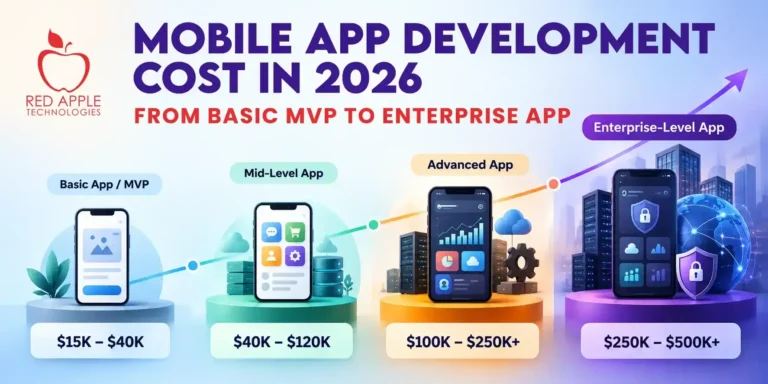
A professionally developed mobile app can cost roughly $15,000 to $500,000+ in 2026. That range is wide because “mobile app” can describe anything from a focused product with a few...
A mobile app may be the part of a digital product users see first, but much of the real work happens behind the screen. Modern apps often depend on cloud...
From science fiction to our daily assistant, artificial intelligence (AI) has become part of our lives faster than we imagined. A few years ago, businesses discussed AI cautiously. Today, it...
When we were watching television ads about new products, going to the store for shopping, or even when technological advancement sprouted e-commerce where we could buy products online, we didn’t...
Usually, you have to type your queries manually when using any mobile app. But with the introduction of the voice search feature, you can easily place your query orally to...

In today’s competitive market, ensuring customer satisfaction has become a top priority for businesses. The latest report from Zippia mentions that organizations transforming customer experience (CX) can achieve an 80...
Gamification in ecommerce is becoming a popular strategy to engage customers, improve retention, and increase sales. By incorporating game-like elements into the online shopping experience, businesses can create more interactive...

Mobile applications have become an essential part of modern business strategies, transforming how companies interact with customers, deliver services, and drive innovation. However, with the rapid adoption of mobile technology...
From general people to business establishments, digital wallet apps are emerging as a popular, faster, and more efficient medium of financial transactions worldwide. With a staggering market value of $9.55...

The healthcare industry is booming thanks to rapid digitization and the rise of smartphones, creating exciting opportunities for businesses. This surge is attracting savvy entrepreneurs eager to invest and capitalize...


 Book An Appointment
 WhatsApp