


- Blog
- >
- Game Development
- >
- Mastering Video Game Economy...
Mastering Video Game Economy Design in 2025: A Comprehensive Guide
Why Game Economy Matters
Imagine opening a game and instantly getting hooked, not just by its visuals or story, but by the sense of reward, progression, and value it offers. That’s the power of a well-crafted in-game economy. From Fortnite to Genshin Impact, game economies are not just design elements; they’re revenue engines, retention mechanisms, and player experience enhancers.
As of June 2025, mobile Genshin Impact in China generated $1.72 billion dollars worth of IAP revenues. Ranking second is Japan, with over 1 billion U.S. dollars in in-app purchase revenues. The United States were ranked third.
What drives this success? A robust, engaging, and balanced economy. Let’s explore what makes a game economy function well, how different player behaviors influence it, and how developers can design systems that enhance engagement and profitability.
What Is an In-Game Economy?
An in-game economy is a virtual system within a game that governs how goods, currencies, and services are created, exchanged, and consumed. Much like a real-world economy, it includes mechanisms for earning and spending, scarcity and abundance, and even inflation or trade. However, it’s crafted with game-specific rules and design goals in mind, often to support progression and monetization.
Types of Game Economies
Different games require different types of economies. Here’s how they compare:
| Type | Description | Example Games | Pros | Cons |
|---|---|---|---|---|
| Closed Economy | All resources earned only through gameplay. No external transactions. | Final Fantasy, early Zelda titles | Predictable, tightly controlled | Limits monetization and flexibility |
| Open Economy | Player-driven trade and market systems; prices based on supply/demand. | EVE Online | Dynamic, community-driven | Prone to inflation, imbalance |
| Real-Money Economy | Real currency used to buy/sell virtual goods. | CS:GO, Diablo III Auction House | Generates significant revenue | Risk of pay-to-win, legal complications |
| Hybrid Economy | Combines free gameplay, in-game currency, and real-money transactions. | Fortnite, Genshin Impact | Broad appeal, scalable monetization | Requires careful balance |
| Play-to-Earn (P2E) | Blockchain-based; rewards can be traded for crypto. | Axie Infinity | Real ownership of assets | Regulatory, ethical, and sustainability issues |
Each model has unique impacts on gameplay and revenue. Choosing the right one depends on your game’s goals and target audience.
Designing a Game Economy: A Strategic Approach
Designing a game economy begins with your game loop—the recurring set of actions that drive gameplay. The economy should support these actions with logical rewards, progression pacing, and monetization options.
Introduce currencies early on, usually with a dual-tier system: soft currency (earned easily) and hard currency (usually paid). Rewards must scale with effort. A player finishing a tough level should get more than one completing a simple task.
To prevent inflation and hoarding, include currency and item “sinks” like item upgrades or character unlocks. Prices should reflect item value and rarity, encouraging players to engage consistently.
Regular testing, using tools like A/B testing or telemetry, helps ensure balance and fairness.
Understanding Player Behavior
Understanding why players behave the way they do helps shape your economic system:
- Hoarders collect resources for future use. While natural, unchecked hoarding can lead to imbalance. Developers often cap inventory or introduce item expiration.
- Completionists seek 100% completion, including rare or hidden items. Engaging them involves collectibles, achievements, and secrets—like Doom Eternal’s hidden rooms.
- Gambling Enthusiasts enjoy risk-based activities, like card games or loot boxes. These must be clearly separated from real-money spending to remain ethical.
- Spenders pay for convenience or status. The key is to reward them without punishing non-spenders, keeping progression enjoyable for all.
Tools for Economy Design and Balancing
Here’s a quick comparison of tools that can support game economy design:
| Tool | Purpose | Ideal For | Strengths |
|---|---|---|---|
| GameAnalytics | Player behavior & monetization tracking | Mobile & web games | In-depth metrics, easy integration |
| Unity Analytics | In-engine data tracking | Unity-built games | Seamless Unity integration |
| Balancy | Economy simulation & balancing | Mid-size studios | Visual interface, customizable models |
| PlayFab Economy | Backend for virtual goods & currencies | Cross-platform titles | Robust backend services |
| Firebase + A/B Testing | Experimentation & segmentation | F2P games | Fast iteration and insights |
What’s Next: Emerging Trends
Economy systems are evolving in sync with new technologies and ethics:
- AI-Driven Personalization: AI tailors in-game store offerings and pricing based on user behavior, maximizing retention.
- Tokenized Assets: NFTs and blockchain enable players to truly own items, though adoption remains niche and controversial.
- Ethical Monetization: Transparency and fairness are becoming priorities. Developers avoid dark patterns in favor of long-term trust.
- Subscription Models: Battle Passes and monthly content drops replace traditional DLC, offering consistent revenue and engagement.
Case Study: Clash Royale
Clash Royale showcases a hybrid economy with free-to-play accessibility and strong monetization:
| Currency | Use | Source | Monetization Angle |
|---|---|---|---|
| Gold | Upgrade cards | Battles, chests | Encourages engagement |
| Gems | Unlock chests, buy offers | Events, purchase | Drives microtransactions |
Pitfalls to Avoid
Design flaws can quickly ruin a game’s economy:
- Over-rewarding: Too many freebies inflate the economy and reduce challenge.
- Lack of Sinks: Without reasons to spend, players hoard resources and disengage.
- Unfair Pricing: Items priced too high or too low skew perceptions of value.
- Over-monetization: Excessive pay-to-win elements frustrate players and hurt retention.
Regular updates and real-world testing prevent these issues from spiraling.
Conclusion: Balancing Experience and Profit
A successful game economy balances engagement, satisfaction, and monetization. It must evolve with player needs and technological shifts. With the right tools and strategy, you can create an ecosystem that delights users while supporting sustainable growth.
Need expert help with your game’s economy design? Contact us for consultation or watch out for our upcoming blog on “The Evolution of Video Game Revenue Models.”
To Have A Better Understanding On This Let us Answer The Following Questions
Why is economy design important in video games?
Answer: A robust economy increases player retention, supports fair progression, and boosts monetization.
What are the key components of a video game economy?
Answer: They include virtual currencies, resource generation, pricing, sinks, rewards, and trading systems.
How do developers balance in-game economies?
Answer: Through playtesting, data analysis, user feedback, and A/B testing to adjust reward rates and pricing.
How does monetization affect game economy design?
Answer: It shapes how players access content—whether through effort or payment—impacting fairness and satisfaction.
How do free-to-play games manage economies?
Answer: By offering progression loops, limited-time offers, premium currencies, and free rewards to keep engagement high.
Can poor economy design ruin a game?
Answer: Yes. It can cause player frustration, imbalance, churn, and loss of revenue.

Related Blogs
Discover more stories & insights that inspire
Two game studios can show equally polished portfolios and still create very different production risk. The difference often becomes visible only after you look beyond the showreel: who will actually...
A game can have a strong core loop and still run into trouble if two business decisions are left until the end: how it will make money and how it...
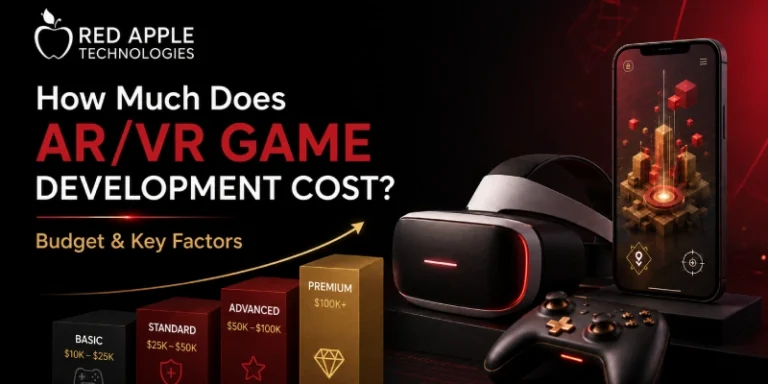
An AR prototype built around one core interaction and a multiplayer VR game designed for several headsets should not receive anything close to the same estimate. Both may fall under...
A good-looking game can still fail to hold a player’s attention if its mechanics are unclear, progression feels unrewarding, or levels become frustrating for the wrong reasons. Game design goes...
Despite occupying second position after China, the USA still manages to be a superpower in the global game industry. Whether game development or game publishing, the USA continues to shine...
Italy has quietly developed into one of Europe’s most creative mobile game development ecosystems. While the country may not match the scale of mobile gaming markets like the United States...
The UAE — particularly Dubai and Abu Dhabi — has rapidly evolved into one of the Middle East’s most ambitious gaming hubs. Backed by government-led initiatives, global investment, and major...
Turkey has become one of the fastest-growing mobile gaming ecosystems in Europe. Over the past decade, mobile game developers in Turkey have produced globally successful casual and hyper-casual titles, attracted...
Spain has established itself as one of Europe’s most active mobile game development markets. With internationally successful studios, experienced live-operations teams, and competitive production structures, the country continues to attract...
Game development followed a familiar pattern for decades: build everything in-house or outsource isolated tasks when schedules slipped. That model has been quietly changing. It’s 2026, and while a section...


 Book An Appointment
 WhatsApp