


- Blog
- >
- agency or freelancer for...
- >
- game development company
- >
- What Psychological Elements Make...
What Psychological Elements Make Games Addictive? The Science Behind “Just One More”
At some point, most gamers have said, just a few more minutes, only to discover that hours have passed without noticing. That isn’t a mere distraction; it’s a reflection of how games intersect with human motivation and cognition.
Games are not just digital systems of rules and graphics. They are emotional machines, systems designed to capture attention, sustain engagement, and invite players into states of deep involvement. What many developers and product leaders don’t fully appreciate is that these systems are grounded in psychological mechanisms that have been studied for decades, not created overnight by marketing teams.
To understand why games can feel addictive, we need to look not at superficial features (loot, timers, quests) but at how those features tap into human motivational architecture. We also need to acknowledge the ethical dimensions of these mechanisms. Engagement can be healthy and constructive, or it can slip into exploitative traps that undermine player well-being.
This is the terrain of modern engagement design, where studios increasingly invest in game psychology design services and bring in experts to shape player experience with intention. Whether you are a designer, a producer, or a studio leader evaluating whether to hire game engagement designers, this article explores the science with nuance and depth.
Dopamine and the Architecture of Motivation
The popular idea that games hijack the brain by flooding it with “pleasure chemicals” oversimplifies how motivation works. Dopamine is not a signal that says “this if fun,” but rather a neurochemical that registers anticipation and expected value; the push toward possibilities rather than fulfillment.
When a player approaches a reward (a loot drop, a level completion, a rare unlock), the brain produces peaks of dopaminergic activity in regions associated with prediction and learning. This neural pattern aligns with classical research on reward schedules that shows uncertain or variable reinforcement — rewards that occur not every time but intermittently — maintain higher engagement than consistent reward systems. This principle, first documented in behavioral psychology experiments, explains why unpredictable in-game rewards feel compelling: there’s always a next possibility to chase.
Teams that offer professional player engagement solutions for games don’t simply add random rewards. They delicately calibrate the expectation curves so that engagement feels satisfying, challenging, and compelling; not compulsive or hollow.
Understanding dopamine’s role is foundational to ethical engagement. It helps teams move beyond assumptions to design systems where effort feels acknowledged, progress feels meaningful, and engagement arises out of mastery rather than compulsion.
The Drive for Mastery and Visible Progress
Human beings are wired to seek competence. Psychological models of intrinsic motivation, such as Self-Determination Theory, identify mastery as a central human desire. What games do beautifully is make competence visible. Progress bars, skill trees, ranks, and unlocks are not merely UI elements; they are representations of growth.
Consider the difference between a high score on a leaderboard and incremental improvements in level progression. The former signals relative status, while the latter signals self-improvement. Both are motivational, but the latter taps into an internal drive that persists even without social comparison.
When designers think in terms of progression loops rather than isolated features, they create systems where players feel they are genuinely becoming something — more skilled, more knowledgeable, more capable. That is far more engaging than delivering rewards for trivial actions. Good teams conceptualize progression as a value trajectory, not a chore list.
It is common for studios exploring advanced engagement to consult with a game behavior design company. These specialists help align mechanics with authentic motivational pathways, ensuring that progression reinforces growth and identity formation, not just repeated clicks.
Social Belonging: The Human Dimension of Play
At its core, gaming is a social medium as much as it is a technical one. Humans are profoundly social beings; the need for belonging and connection is foundational. Games extend social connection into digital spaces through guilds, teams, shared objectives, and public recognition systems.
When players collaborate to achieve a collective goal or celebrate each other’s achievements, they are participating in a form of digital social bonding. The biochemical reward signals here (oxytocin and social reinforcement pathways) are real and powerful, even if they occur in virtual contexts.
This is not about shallow social mechanics like friend lists or chat boxes. It is about structures that create shared purpose, collective challenge, and recognized contribution./ Games that design systems supporting real social agency, where players feel teammates need them and vicefulsa, see retention patterns that are qualitatively different from games focused on individual achievement alone.
Experienced engagement designers understand that social motivation is about identity and community, not gamified checkboxes.
Flow States: Deep Engagement Beyond Rewards
Flow, a concept introduced by psychologist Mihaly Csikszentmihalyi, describes a mental state where challenge and skill are in harmony, a state in which a person’s attention is fully absorbed in the task at hand, often to the point that time perception changes.
In games, flow emerges when systems are tuned so that success grows organically with effort: tasks are neither trivially easy nor frustratingly hard, and feedback is immediate and clear. This is why players lose track of time in moments of deep engagement; they are not chasing rewards, they are experiencing the task itself.
Flow is not accidental; it emerges from deliberate design. It requires thoughtful pacing, responsive systems, and honest challenges that respect the player’s growing competence.
Teams that consult experts in player engagement solutions for games or hire game engagement designers often focus on flow as a central design principle because it drives engagement from intrinsic satisfaction, not merely reactive reward chasing.
The Psychology of Uncertain Rewards
Another major psychological lever in games is uncertainty. This is the same principle that underlines certain forms of gambling: when outcomes are unpredictable, behavioral persistence increases. Variable reward schedules (where a desired outcome may occur at different intervals or probabilities) keep players engaged longer than fixed schedules.
This isn’t about random loot for its own sake, but about how humans learn and adapt to feedback. When the brain cannot reliably predict exactly when a reward will occur but knows that effort increases likelihood, motivation persists. This explains why surprise drops, gacha mechanics, or rare achievements drive repeated engagement.
The ethical challenge is in balancing excitement with fairness. Transparent probability information, attainable value through effort, and soft guarantee mechanisms maintain player trust while preserving the psychological engagement that uncertainty can afford. Good design doesn’t obscure; it informs.
Identity Investment and Emotional Attachment
Games are among the few media where users actively construct identity. Players customize avatars, accumulate accomplishments, and craft narratives that reflect personal taste and investment. This is not trivial; psychological research on identity shows that people value representations that reflect their self-concept, and they resist losing symbols of invested effort or identity work.
When a player logs hundreds or thousands of hours into a character, the attachment goes beyond surface engagement; it becomes emotionally anchored. Quitting then feels like relinquishing a part of one’s digital self, and that resistance to loss is a powerful motivational force.
Rather than exploit this through coercive mechanics, thoughtful design treats identity investment as a gateway to meaningful gameplay, not a trap. Emotional attachment can enhance satisfaction, narrative depth, and long-term engagement when it arises from authentic expression rather than compulsion.
Ethical Engagement vs. Exploitation
Not all engagement systems are created equal. Dark patterns (design techniques that deliberately exploit psychological vulnerabilities) have become a concern in contemporary game ecosystems. These include systems that create artificial urgency, punitive decay mechanics, or reward timing designed to create dependency rather than enjoyment.
Research acknowledges that a small percentage of players may experience problematic behavior patterns in extreme cases, but it also makes clear that most engagement reflects normal human motivation, not pathology. The goal of ethical engagement design is to respect agency, transparency, and well-being, creating systems that players choose to engage with, not feel trapped by.
A growing number of studios view this responsibility as fundamental. Partnering with a game behavior design company is no longer a luxury; it is a strategic choice that differentiates long-term trusted brands from transient, exploitative models.
Integrating Behavioral Science into Design Practice
Understanding why games can feel addictive is not about exploiting psychological vulnerabilities; it’s about crafting experiences that are genuinely worth returning to. When teams integrate behavioral insights with strong ethical frameworks, the result is engagement that feels rewarding, not manipulative.
Professional practices in this space include:
- Iterative testing of motivational pacing
- Data-informed design of progression curves
- Social system architecture that supports genuine community
- Mechanisms for autonomy and meaningful choice
- Clear communication of reward systems and probabilities
To Have A Better Understanding On This Let us Answer The Following Questions
Answer: Dopamine-linked anticipation loops combined with uncertainty and skill progression drive recurring engagement.
Answer: Because systems that align challenge, reward, and progression produce sustained motivational states that override ordinary time awareness.
Answer: Yes, ethical engagement prioritizes player autonomy, transparency, and positive motivation rather than coercive dependency.
Answer: Yes. Teams that invest in behavioral insights and professional engagement design differentiate themselves with deeper player satisfaction, longer retention, and resilient communities.

Related Blogs
Discover more stories & insights that inspire

A mobile game portfolio can look impressive without telling you much about the work behind it. One company may have built an Android and iOS game from concept to launch....

Two game studios can show equally polished portfolios and still create very different production risk. The difference often becomes visible only after you look beyond the showreel: who will actually...
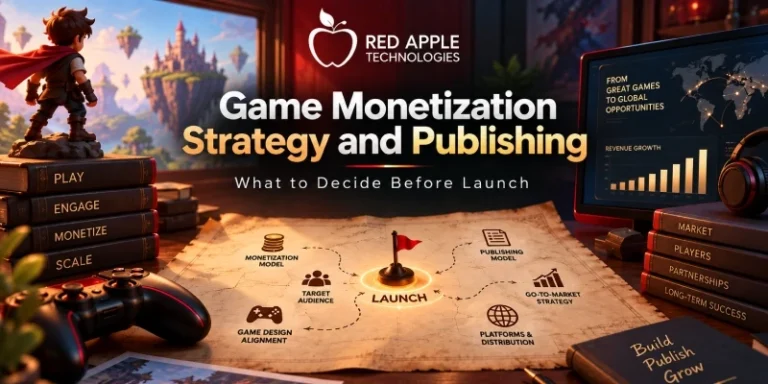
A game can have a strong core loop and still run into trouble if two business decisions are left until the end: how it will make money and how it...
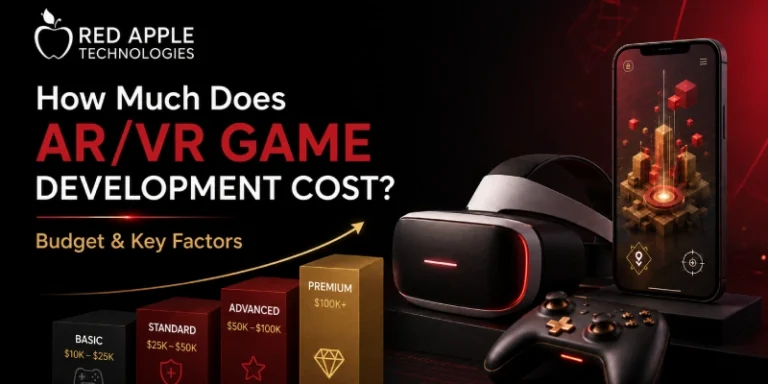
An AR prototype built around one core interaction and a multiplayer VR game designed for several headsets should not receive anything close to the same estimate. Both may fall under...

A quote tells you what a studio expects the project to cost. A portfolio shows what it has worked on. Neither tells you whether the team assigned to your game...
A good-looking game can still fail to hold a player’s attention if its mechanics are unclear, progression feels unrewarding, or levels become frustrating for the wrong reasons. Game design goes...
The wrong partner doesn’t fail your project on day one. It fails itself slowly through delays, compliance gaps, and missed market windows. In the iGaming industry, your technology partner is...

A $100 billion market. Millions of bets placed every minute. And most new operators still get the cost wrong. Not because the opportunity isn’t real, but because they underestimate the...

As the third-largest market in Europe, France is gradually making its presence felt in the global game industry. With over 500 million game studios and a vibrant gaming population of...
Despite occupying second position after China, the USA still manages to be a superpower in the global game industry. Whether game development or game publishing, the USA continues to shine...


 Book An Appointment
 WhatsApp