


- Blog
- >
- iGaming Solutions
- >
- iGaming Licensing Cost by...
iGaming Licensing Cost by Jurisdiction
Launching an online casino or sportsbook requires more than technology and game integrations. Operators must obtain a valid iGaming license from a recognized regulator before offering online gambling services. The cost of an iGaming license varies significantly depending on the jurisdiction, regulatory requirements, and type of gambling platform.
Licensing ensures that gaming platforms operate under strict standards related to player protection, anti-money laundering procedures, and responsible gambling policies. However, licensing costs can vary significantly depending on the jurisdiction, regulatory requirements, and type of gambling services offered. Some licenses are relatively affordable and allow faster market entry, while others involve extensive compliance procedures and higher operational costs.
Understanding these differences enables operators to select the jurisdiction that best aligns with their business strategy and budget, as well as choose the right iGaming solutions company for the next step.
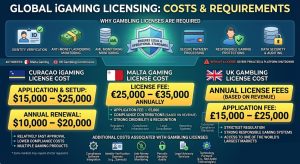
Before moving ahead with all details, here’s a quick look at the average cost estimation.
iGaming License Cost Comparison by Jurisdiction
| Jurisdiction | Application Fee | Annual Cost | Approval Time | Regulatory Strength |
|---|---|---|---|---|
| Curacao | $15k–$25k | $10k–$20k | 4–8 weeks | Moderate |
| Malta | ~€5k | €25k–€35k+ | 4–6 months | High |
| United Kingdom | £15k–£25k | Revenue-based | 4–6 months | Very High |
| Isle of Man | £5k+ | £35k+ | 3–4 months | High |
Why Gambling Licenses Are Required
Regulated markets require iGaming operators to obtain official licenses to ensure that gaming platforms follow strict legal and operational standards. Licenses typically require operators to implement:
- Identity verification systems
- Anti-money laundering monitoring
- Secure payment processing
- Responsible gaming protections
- Data security and auditing systems
Authorities such as the Malta Gaming Authority and the UK Gambling Commission enforce these rules to protect both players and the financial system. Operating without a license in regulated markets can lead to severe penalties and platform shutdowns.
Curacao iGaming License Cost
The Curacao license has historically been one of the most accessible entry points for new operators. Issued under the supervision of the Curaçao Gaming Control Board, this license allows operators to run online casinos, sportsbooks, and other gambling services.
General costs may include:
- Application and setup: $15,000 – $25,000
- Annual renewal: $10,000 – $20,000
Advantages of a Curacao license include:
- Relatively fast approval process
- Lower compliance costs
- Ability to launch multiple gaming products under one license
However, some markets and payment providers may require licenses from stricter regulators.
Malta Gaming License Cost
The Malta license is considered one of the most respected regulatory approvals in the global gambling industry. Issued by the Malta Gaming Authority, it allows operators to offer gaming services across many European markets.
General costs may include:
- Application fee: around €5,000
- License fee: €25,000 – €35,000 annually
- Compliance contributions based on revenue
Additional costs may include:
- Regulatory audits
- Compliance infrastructure
- Legal consultation
- Reporting systems
While more expensive than some alternatives, the Malta license offers strong credibility and regulatory recognition.
UK Gambling License Cost
The United Kingdom has one of the most strictly regulated online gambling markets. Licenses are issued by the UK Gambling Commission and require operators to meet extensive compliance standards.
General costs may include:
- Application fee: £15,000 – £25,000 depending on business size
- Annual license fees based on revenue
- Additional compliance costs
Operators must also implement strong responsible gaming systems and financial monitoring processes. While expensive, a UK license provides access to one of the world’s largest regulated gambling markets.
Other Emerging Licensing Jurisdictions
In addition to Malta, Curacao, and the United Kingdom, several other jurisdictions offer iGaming licenses. Common alternatives include:
- Gibraltar: respected regulator with strong industry reputation
- Isle of Man: known for strict regulatory standards
- Estonia: growing hub for digital gambling companies
Each jurisdiction has its own licensing requirements, costs, and approval timelines. Operators should evaluate market access, compliance obligations, and operational flexibility when choosing a licensing jurisdiction. They should also seek only the best, most reputable partners for iGaming development solutions.
Additional Costs Associated With Gambling Licenses
Obtaining a license is only part of the total cost. Operators must also budget for additional regulatory expenses. These may include:
- Compliance software integration
- Identity verification systems
- Anti-money laundering monitoring
- Periodic security audits
- Legal advisory services
Many operators implement verification solutions from providers such as Sumsub to comply with identity verification requirements. Technology partners such as Red Apple Technologies also assist operators in integrating compliance infrastructure into their gaming platforms during development. These technical integrations ensure that the platform meets regulatory standards before launch.
Choosing the Right Licensing Jurisdiction
Selecting the right license depends on several strategic factors. Operators should consider:
- Target markets
- Regulatory reputation
- Compliance requirements
- Approval timeline
- Licensing costs
For example, startups entering emerging markets may prefer faster and more affordable licenses, while operators targeting highly regulated markets often pursue stricter licenses to build trust with players and payment providers.
Implementing Licensing and Compliance in iGaming Platforms
Obtaining a gambling license is only one part of launching a regulated iGaming platform. Operators must also implement the technical infrastructure required by regulators. Licensing authorities typically require platforms to support:
- Identity verification systems
- Anti-money-laundering monitoring
- Responsible gaming tools
- Transaction tracking and reporting
- Secure player data storage
These systems must be integrated directly into the platform architecture before launch. We assist operators in building compliant gaming platforms by integrating identity verification, payment systems, and regulatory reporting tools during the development process.
By designing platforms with compliance requirements in mind from the beginning, operators can avoid costly delays during the licensing approval process and ensure their systems meet regulatory standards across different jurisdictions.
Conclusion
Licensing is one of the most critical steps in launching an online casino or sportsbook. The cost and complexity of obtaining a gambling license vary widely depending on the jurisdiction. While some licenses offer faster approval and lower fees, others provide stronger regulatory credibility and access to larger markets.
Understanding these differences allows operators to plan their budgets and choose licensing strategies aligned with their long-term growth goals. For a broader breakdown of the expenses involved in building and operating a gaming platform, operators should review the complete iGaming software cost guide, which explains development, infrastructure, and operational costs in detail.
When planning an online casino or sportsbook launch, operators must evaluate licensing costs alongside technology development, infrastructure, and compliance systems. Hire experienced iGaming developers to ensure that these regulatory requirements are properly integrated into the platform architecture from the start.
To Have A Better Understanding On This Let us Answer The Following Questions
Answer: The cost of an iGaming license varies depending on the jurisdiction and the type of gambling services offered. Entry-level licenses may cost between $15,000 and $30,000, while licenses from stricter regulators can require significantly higher application fees, annual license fees, and compliance costs. In addition to licensing fees, operators must also budget for identity verification systems, security audits, and regulatory reporting infrastructure.
Answer: One of the most affordable licensing options is typically offered by regulators, such as the Curaçao Gaming Control Board. These licenses often involve lower application costs and faster approval timelines compared with stricter European regulators. However, operators should consider regulatory credibility, market access, and payment provider requirements when choosing a licensing jurisdiction.
Answer: Approval timelines depend on the regulator and the complexity of the application. Licenses issued by authorities, such as the Malta Gaming Authority or the UK Gaming Commission, may take several months due to detailed compliance checks and financial reviews. Some jurisdictions offer faster approval processes, allowing operators to launch within a shorter timeframe.
Answer: Yes. Licensing authorities require operators to maintain ongoing compliance systems for identity verification, anti-money laundering monitoring, and responsible gambling protections. Many platforms integrate identity verification services, such as Sumsub, to meet regulatory requirements. Red Apple Technologies often assists operators in integrating these compliance tools during platform development.
Answer: Yes. Many large gambling operators hold multiple licenses in different jurisdictions to access multiple regulated markets. Each license requires separate compliance procedures and regulatory reporting. Operating under multiple licenses can increase credibility with players and payment providers while expanding the platform’s global reach.
Table of Contents
Quick Links

Related Blogs
Discover more stories & insights that inspire

Online casino gaming has moved well beyond digital versions of slots, roulette, blackjack, and poker. Modern platforms combine real-time game delivery, mobile-first interfaces, live streaming, analytics, payments, identity verification, player-protection...
The wrong partner doesn’t fail your project on day one. It fails itself slowly through delays, compliance gaps, and missed market windows. In the iGaming industry, your technology partner is...

Online casinos look deceptively simple from the outside: a clean lobby, a few games, a deposit button, and maybe a big welcome bonus. Behind that interface, launching a real online...
Payment processing is one of the most important parts of an iGaming business, yet it is often treated like a quick technical setup rather than a core piece of the...

A game aggregator is not just another software product. For investors, it is better understood as infrastructure: a platform that connects many game providers, delivers content through one system, and...

Launching an online casino or sportsbook requires choosing the right technology foundation. One of the most important decisions operators face is whether to use a white-label platform or build a...

Evolving into a profitable business worldwide, iGaming as a segment is not just restricted to casino games like slots, roulette, bingo, and poker. It also includes various virtual sports like...

The term iGaming is often used broadly, with many people, sometimes using it incorrectly, to describe a fast-growing segment of the digital entertainment economy. At its core, iGaming refers to...
KYC AML integration in iGaming is no longer a regulatory afterthought. It is the core infrastructure. For operators building or scaling regulated platforms, compliance architecture determines whether growth is smooth...

iGaming or internet gambling is evolving into a highly profitable business segment. Standing on a global revenue of $118 billion, investment in the industry is expected to maintain an impressive...


 Book An Appointment
 WhatsApp