


How LiveOps Improves Player Retention and Engagement
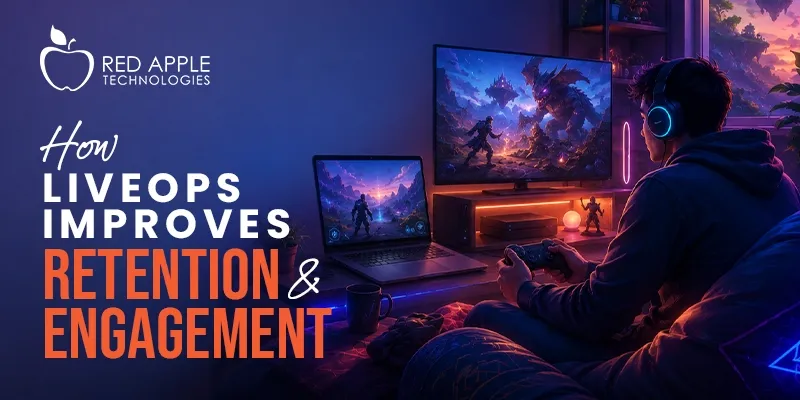
Most games don’t lose players because they’re bad. They lose players because they stop giving people a reason to return. That’s the real challenge after launch. You’ve already built the core experience. Now the question becomes —
How do you keep players coming back tomorrow, next week, and months later?
That’s exactly what LiveOps is designed to solve.
Retention and Engagement – The 2 Metrics That Matter Most
Before getting into tactics, it’s important to understand the difference. Retention is about return. Do players come back after their first session?
Engagement is about depth. When they return, how much time do they spend, and how actively do they participate?
You need both. A game with strong retention but low engagement feels repetitive. A game with high engagement but poor retention gets a chance to grow. LiveOps retention solutions work by strengthening both at the same time.
Why Players Leave in the First Place
Most drop-offs happen for predictable reasons:
- Players run out of meaningful content.
- Progression feels too low or too easy.
- There’s no clear reason to log in again.
None of these issues are solved by a one-time update. They require a system that continuously responds to player behavior. That’s where player engagement LiveOps services come in.
Creating Reasons to Return
At its core, LiveOps builds habits.
Daily rewards, limited-time events, evolving challenges, these aren’t just features; they’re triggers that encourage players to come back regularly. But timing matters.
If updates feel random, players ignore them. If they follow a predictable rhythm, players begin to anticipate them. This is why high-performing games operate on consistent content cycles. Players don’t just play, they plan when to return.
Events That Actually Drive Engagement
Some games run events constantly, but players stop paying attention because nothing feels meaningful. Others run fewer events but design them with clear goals and rewards. The difference is intent.
Good LiveOps events:
- Offer something players can’t get elsewhere
- Fit naturally into the game’s progression
- Feel worth the time investment
A strong LiveOps agency for mobile games doesn’t just launch events, it designed them to change player behavior.
Personalization Makes a Noticeable Difference
Treating every player the same is one of the fastest ways to lose engagement.
- New players need guidance and quick wins
- Experienced players want deeper challenges.
- High-value players expect exclusive content.
LiveOps allows you to respond to these differences. Instead of a single experience, players receive content that matches their stage and style. That relevance increases both retention and session time. This is where working with a LiveOps partner for player engagement becomes valuable because personalization at scale requires both data and structure.
Small Improvement Add Up Faster Than You Think
One of the most important things to understand about LiveOps is that it’s incremental. You don’t need to double engagement overnight. Here’s what you should do:
- Improve Day 1 retention slightly
- Increase session length by a few minutes
- Make events just a bit more compelling
These small gains compound. Over time, they can significantly increase lifetime value and overall game performance. That’s why many studios invest in a dedicated LiveOps company for game retention rather than relying on occasional updates.
Data Changes How Decisions Are Made
Without LiveOps, decisions are often based on assumptions. With LiveOps, decisions are based on behavior. For instance, you can see where players drop off – you can measure which events perform best – you can identify what drives spending and what doesn’t.
According to insights from Statista, games that actively optimize engagement through data-driven updates tend to retain players longer and generate higher lifetime value. That’s the advantage of LiveOps — it replaces guesswork with clarity.
Engagement Isn’t Just About Content
It’s easy to think that adding more content automatically improves engagement. It doesn’t. What matters is how that content fits into the overall experience. If progression feels unbalanced, new content won’t fix it. If rewards don’t feel meaningful, players won’t engage.
LiveOps works best when content, progression, and rewards are aligned. That alignment is what keeps players invested over time.
The Role of Consistency
One of the biggest differences between successful and struggling games is consistency. Successful games don’t rely on occasional spikes in activity. They maintain a steady rhythm of updates, events, and improvements. Players come to expect that consistency. Once that expectation is set, retention improves naturally.
This is where structured execution, often delivered by teams like Red Apple Technologies, makes a real difference. It ensures that LiveOps isn’t reactive, but planned and sustainable.
When LiveOps Starts to Pay Off
LiveOps doesn’t always show immediate results. But once the system is in place, the impact becomes clear. Players return more often – sessions last longer – and revenue becomes more predictable. These changes don’t happen because of a single feature but because the game is continuously improving based on real player behavior.
Bottomline
Player retention and engagement aren’t solved with one update. They’re built over time. LiveOps provides the structure to make that happen, by turning player behavior into insights, insights into improvements, and improvements into sustained growth. In a competitive market, that’s not just an advantage. It’s what keeps your game alive.
To Have A Better Understanding On This Let us Answer The Following Questions
Answer: By creating consistent updates, events, and rewards that give players a reason to return regularly.
Answer: They are strategies and systems designed to increase player return rates through data-driven updates and engagement tactics.
Answer: Yes, by introducing meaningful content, personalization, and continuous improvements based on player behavior.
Answer: Usually due to lack of new content, poor progression balance, or no clear reason to return.
Answer: If your game depends on long-term engagement, a specialized agency can help improve retention and overall performance.
Get Started
- End-to-End Game & App Development Services
- Flexible Business Models – Project Based or Dedicated Hiring
- 13+ Years of Industry Experience with Global Clientele
- Globally Recognized by Clutch, GoodFirms & DesignRush
Related Blogs
Discover more stories & insights that inspire
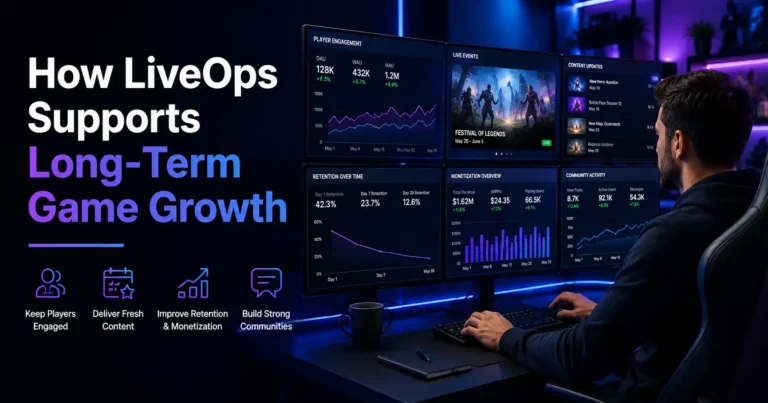
This isn’t anything new—some games launch with massive attention and still disappear within a year, while others grow slowly by keeping players engaged—the latter generate revenue for years. Luck? No!...

Why do you think games like PUBG, Clash of Clans, and Mobile Legends have been relevant for years? Most games disappear after launch. Is it just the graphics that hold...
In our past posts, we have made sure you understand what LiveOps is, how it improves retention and engagement, and how it supports the long-term growth of a game. One...

LiveOps Explained Without the Buzzwords To those looking to build a game for the first time, a game doesn’t end at launch, it evolves. Players expect new content, fresh challenges,...
San Francisco continues to be one of the most influential hubs for game development innovation. But in today’s landscape, success is no longer defined by launch metrics alone. The real...
Shipping a game used to be the finish line. Now it’s the starting point. The studios that grow consistently aren’t just building great gameplay; they’re building systems that keep players...
A full-cycle game development approach is not defined by how quickly a game is shipped or how many features it includes at launch. It is defined by how consistently the...


 Book An Appointment
 WhatsApp