


How LiveOps Supports Long-Term Game Growth
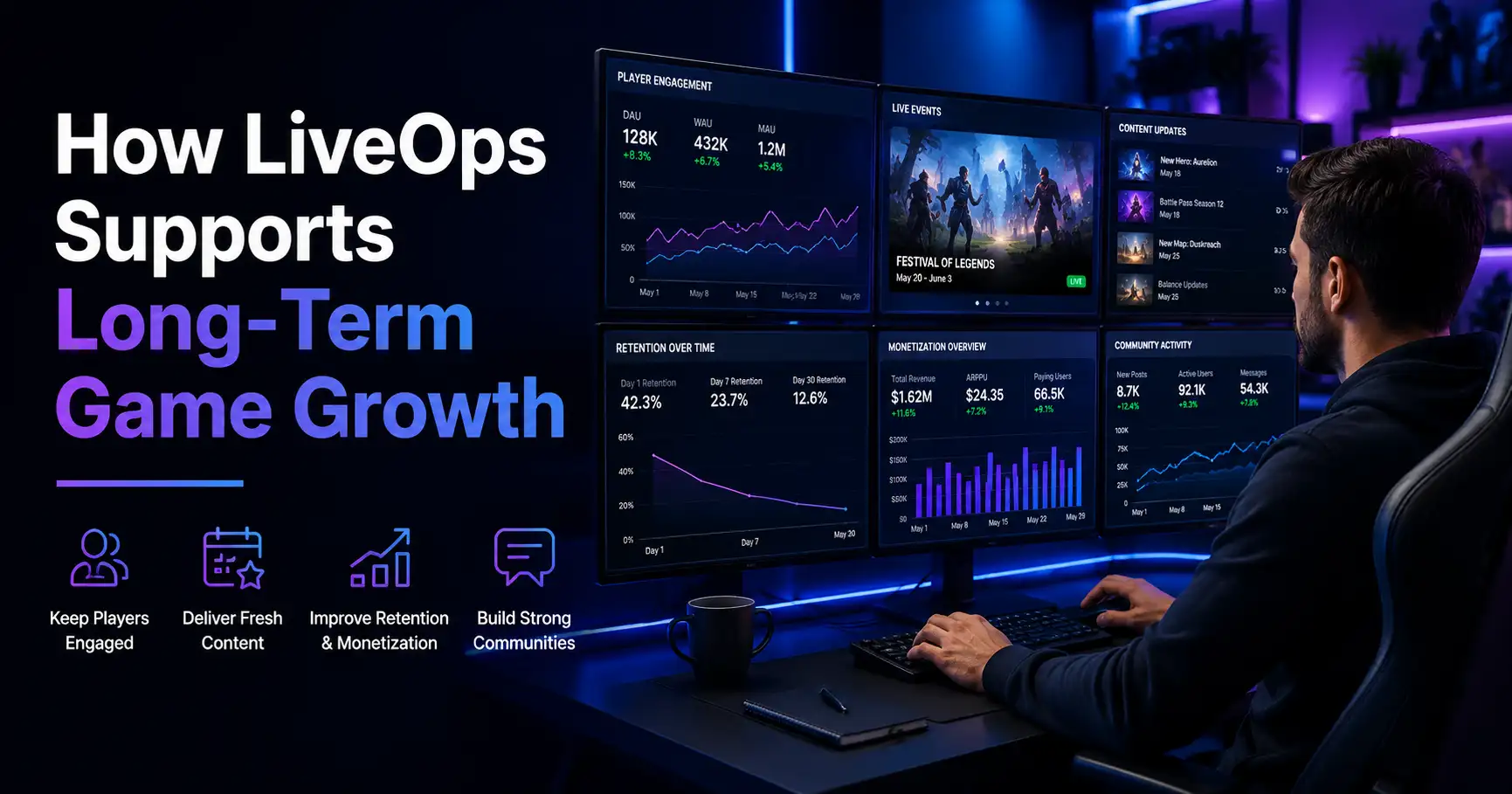
This isn’t anything new—some games launch with massive attention and still disappear within a year, while others grow slowly by keeping players engaged—the latter generate revenue for years. Luck? No! It’s sustainability.
Long-term growth in gaming rarely comes from a single successful launch. It was the case decades ago. Today, it comes from a game’s ability to stay relevant. A game shines when it continuously adapts to player behavior, introduces new experiences, and maintains engagement long after the initial release window closes.
That’s exactly where LiveOps becomes important, not as a marketing tactic, not as an occasional update cycle, but as a long-term operating model for the game itself.
Does a Game Succeed Automatically?
No, it does not. A common mistake in game development is assuming that a strong launch guarantees momentum. The reality is quite different; player attention fades quickly. New competitors appear constantly, and with constant advancements, trends shift, making communities move on faster than they used to.
Without ongoing support, even well-designed games begin losing active users over time. This is why studios increasingly invest in long-term game growth LiveOps solutions. They understand that retention and engagement need to be managed continuously, not only during launch periods.
A Game’s Lifecycle Extends with LiveOps
LiveOps wasn’t mainstream until the 2010s. Before, many games followed a short commercial cycle: a launch generated excitement, revenue peaked early, and activity gradually declined. Modern live games operate differently.
Instead of treating launch as the peak, LiveOps turns it into the beginning of an evolving process. The game keeps changing based on player activity, community feedback, and engagement trends.
That evolution matters because players are more likely to stay invested in games that continue to feel active and responsive. Over time, this significantly extends the game’s commercial lifespan.
Long-Term Growth Comes From Consistent Engagement
Growth in live games is rarely explosive forever. Generally, sustainable growth happens gradually through retention. Players who return consistently spend more time in the game, participate more actively in communities, and are more likely to make purchases over time.
Research shows that retention remains one of the strongest indicators of long-term profit. This is why LiveOps services for game growth focus on maintaining consistent engagement instead of chasing short-term spikes.
Games Stay Relevant with Content Cadence
Players don’t expect games to stay static anymore. They expect movement.
Seasonal updates, events, limited-time modes, and progression refreshes create a sense that the game world is evolving. But frequency alone isn’t enough. Poorly planned updates can overwhelm players or lose impact quickly. The most effective LiveOps strategies create rhythm rather than noise.
That rhythm keeps the community engaged without making updates feel repetitive or forced. A strong LiveOps agency for live games understands how to maintain that balance over long periods.
Data Helps Studios Adapt Instead of Guess
One of the biggest reasons LiveOps supports long-term growth is visibility. Without LiveOps systems, studios often rely heavily on assumptions:
- What players enjoy
- Why retention drops
- Which features drive engagement
With LiveOps, behavior becomes measurable. Teams can see:
- Which events increase activity
- Which systems frustrate players
- Where users stop progressing
That feedback loop allows games to evolve intelligently rather than randomly. Over time, this creates a more stable and player-focused growth strategy.
Communities Grow Stronger Around Active Games
Long-term growth isn’t only about mechanics or monetization, it’s also about community. Games with active LiveOps tend to maintain stronger player communities because there’s always something happening. Discussions continue. Players share strategies. Social activity stays alive.
This matters because communities help sustain engagement organically. Players are far more likely to remain active when they feel connected to an ongoing ecosystem rather than an isolated experience.
Monetization Becomes More Sustainable
Short-term monetization strategies often damage long-term growth. Aggressive monetization can increase revenue temporarily, but it can also reduce trust and increase churn. LiveOps creates a healthier alternative. Instead of forcing purchases, it improves the overall player experience first:
- Better progression systems
- More rewarding events
- Personalized offers
- Consistent content updates
With increasing engagement, monetization becomes more natural and sustainable. That’s one reason many studios partner with a dedicated game LiveOps company instead of approaching LiveOps purely from a revenue perspective.
Flexibility Matters as Games Evolve
No live game stays exactly the same. Player expectations change. Market conditions shift. Features that worked early may become less effective later.
LiveOps supports long-term growth because it allows studios to adapt continuously rather than rebuilding systems from scratch. This flexibility is especially important in mobile and online games, where trends move quickly, and player loyalty is difficult to maintain. A reliable LiveOps strategy partner helps studios respond to those changes without losing momentum.
Operational Consistency Is Often Overlooked
One of the least discussed aspects of LiveOps is operational discipline. Consistent execution matters. Games that grow successfully over the years usually follow structured processes, including:
- Planned event calendars
- Regular performance reviews
- Coordinated content deployment
- Ongoing player analysis
Without structure, LiveOps becomes reactive and inconsistent. This is where experienced partners like Red Apple Technologies provide value. By combining analytics, operational planning, and engagement strategies, they help studios manage growth in a more sustainable way.
Small Gains Compound Over Time
One of the reasons LiveOps works so well for long-term growth is compounding. A small increase in retention today affects next month’s active user base. Better engagement improves future opportunities. Stronger communities increase organic growth. These improvements build on each other gradually. That’s why LiveOps often delivers its biggest results over time rather than immediately.
The Studios That Grow Longest Think Differently
The most successful live games aren’t always the biggest launches. They’re often the games that adapt best. Studios focused on long-term growth treat their games as ongoing services rather than finished products. They expect systems to evolve. They expect player behavior to change, and they build operational structures around that reality.
Bottomline
Long-term game growth doesn’t happen by accident. It comes from continuously improving the player experience, responding to real behavior, and keeping the game world active over time. LiveOps provides the structure that makes that possible. Not just for months after launch, but for years.
To Have A Better Understanding On This Let us Answer The Following Questions
Answer: They are systems and strategies designed to improve retention, engagement, and revenue over the long term through continuous updates and optimization.
Answer: They help games stay active and relevant through events, player engagement strategies, and data-driven improvements.
Answer: Live games depend on ongoing engagement and community activity to sustain growth and revenue.
Answer: A LiveOps strategy partner helps studios plan, manage, and optimize post-launch operations for long-term success.
Answer: Yes. Consistent updates, personalized experiences, and active community engagement significantly improve long-term retention.
Get Started
- End-to-End Game & App Development Services
- Flexible Business Models – Project Based or Dedicated Hiring
- 13+ Years of Industry Experience with Global Clientele
- Globally Recognized by Clutch, GoodFirms & DesignRush
Related Blogs
Discover more stories & insights that inspire
Most games don’t lose players because they’re bad. They lose players because they stop giving people a reason to return. That’s the real challenge after launch. You’ve already built the...

Why do you think games like PUBG, Clash of Clans, and Mobile Legends have been relevant for years? Most games disappear after launch. Is it just the graphics that hold...
In our past posts, we have made sure you understand what LiveOps is, how it improves retention and engagement, and how it supports the long-term growth of a game. One...

LiveOps Explained Without the Buzzwords To those looking to build a game for the first time, a game doesn’t end at launch, it evolves. Players expect new content, fresh challenges,...
San Francisco continues to be one of the most influential hubs for game development innovation. But in today’s landscape, success is no longer defined by launch metrics alone. The real...
Shipping a game used to be the finish line. Now it’s the starting point. The studios that grow consistently aren’t just building great gameplay; they’re building systems that keep players...
A full-cycle game development approach is not defined by how quickly a game is shipped or how many features it includes at launch. It is defined by how consistently the...


 Book An Appointment
 WhatsApp