


How Much Does iGaming Software Really Cost? Full Online Casino Development Cost Breakdown
The iGaming industry continues to expand rapidly as more markets legalize online gambling and digital betting platforms become easier to launch. The global online gambling market reached approximately $78.7 billion in revenue in 2024. This highlights the massive scale of the industry powering iGaming platforms. Entrepreneurs, gaming brands, and casino operators are increasingly exploring opportunities to build their own online casinos, sportsbooks, or hybrid gaming platforms. However, one question appears at the very beginning of almost every conversation:
How much does iGaming software really cost?
The answer is rarely simple. Many vendors advertise low cost to build an online casino, while full custom platforms can require investments exceeding one million dollars. The real cost depends on multiple factors including platform architecture, licensing jurisdiction, regulatory compliance, game integrations, and payment infrastructure.
In reality, iGaming software is not a single product. It is a complex ecosystem composed of multiple systems working together to deliver a secure, scalable, and compliant gaming experience.
This guide breaks down the true cost of iGaming software, explains the different platform models available, and highlights the major cost drivers operators must consider before launching an online casino or betting platform. But first,
iGaming Software Cost at a Glance
For entrepreneurs and businesses entering the online gambling industry, one of the most common questions is how much it actually costs to build and launch an iGaming platform.
While the final investment depends on the platform’s complexity, licensing jurisdiction, and feature set, most projects fall within three general categories.
White-label platforms typically cost between $50,000 and $150,000 and can launch within a few weeks because the core infrastructure is already built.
Turnkey platforms usually require $200,000 to $500,000 depending on customization requirements and the number of integrations involved.
Fully custom iGaming platforms often require $700,000 to more than $1.5 million, since they involve building the entire platform architecture, backend systems, and gaming infrastructure from scratch.
Each option offers different advantages in terms of speed, scalability, and long-term ownership of technology. Understanding these differences helps operators select the most suitable development path for their business goals and available budget.
iGaming Platform Development Cost Comparison
Choosing the right platform model is one of the most important decisions when launching an online casino or betting platform. Each development approach involves different levels of investment, flexibility, and time to market.
| Platform Type | Typical Cost | Time to Launch | Customization Level | Best For |
|---|---|---|---|---|
| White-Label Platform | $50k – $150k | 4–8 weeks | Low | Startups entering the market quickly |
| Turnkey Platform | $200k – $500k | 3–6 months | Moderate | Growing operators who need flexibility |
| Custom Platform | $700k – $1.5M+ | 12–24 months | Full | Established operators building proprietary platforms |
White-label solutions provide the fastest route to market because the provider handles licensing, platform infrastructure, and integrations.
Turnkey solutions offer greater flexibility and branding control, allowing operators to customize their platform while still relying on pre-built systems.
Custom platforms require the highest investment but provide complete ownership and unlimited scalability.
Realistic Budget Example: Launching an Online Casino
Understanding the theoretical cost ranges is helpful, but many entrepreneurs want to see what a realistic launch budget might look like. Below is an example of a mid-scale online casino launch budget.
- Platform development or licensing: $250,000
- Game provider integrations: $40,000
- Licensing and regulatory compliance: $25,000
- Payment gateway integrations: $15,000
- Security and fraud protection systems: $10,000
- Initial marketing and player acquisition: $100,000
- Estimated launch investment: $440,000
This illustrates an important reality of the iGaming industry: platform development is only one part of the total investment required to launch successfully. Marketing, licensing, and payment infrastructure often represent significant additional costs.
Expert Insight: Why Many iGaming Startups Underestimate Costs
One of the most common mistakes new operators make is focusing exclusively on software development costs while overlooking the broader operational requirements of running an online casino.
In practice, the largest long-term expense for most operators is player acquisition and marketing.
Digital advertising, affiliate partnerships, influencer campaigns, and promotional bonuses often require substantial ongoing investment. Without a clear marketing strategy, even well-built platforms may struggle to attract and retain players.
My advice: plan not only for software development but also for the operational ecosystem that supports a successful gaming platform.
This includes payment infrastructure, regulatory compliance systems, and scalable backend architecture capable of handling larger numbers of concurrent players.
CEO of Red Apple Technologies
How to Estimate the Cost of Your iGaming Platform
Every iGaming project is unique, which means the final cost depends on several key decisions made during the planning phase. Businesses considering launching an online casino or betting platform can estimate their potential investment by following a simple framework.
First, determine the platform model. Choosing between white-label, turnkey, or custom development will have the biggest impact on cost and timeline.
Second, selecting the licensing jurisdiction. Different regulatory authorities charge different licensing fees and require varying levels of compliance infrastructure.
Third, estimate the number of game providers and integrations. The larger the game library, the higher the integration and revenue-share costs.
Fourth, calculate the payment infrastructure requirements. Integrating multiple payment gateways, anti-fraud systems, and digital wallet support can increase development costs.
Finally, plan the marketing and player acquisition budget. Successful iGaming platforms often allocate a large portion of their initial investment toward building player traffic.
By evaluating these factors early in the planning process, businesses can develop a realistic budget for launching their platform.
Quick Decision Guide for iGaming Entrepreneurs
Selecting the right development approach depends largely on business objectives, budget, and long-term strategy.
White-label platforms are ideal for startups that want to enter the market quickly with minimal technical complexity.
Turnkey platforms offer a balance between cost and customization, making them suitable for growing operators who want greater control over branding and platform features.
Custom platforms are best suited for companies planning to build large-scale gaming ecosystems with proprietary features, advanced analytics, and unique player experiences.
Understanding these options allows entrepreneurs to align their development strategy with their business goals and growth plans.
Understanding What iGaming Software Actually Includes
Before estimating costs, it is important to understand what “iGaming software” really means. A modern iGaming platform is far more than a website hosting a few slot games.
At its core, the platform functions as a digital operating system for online gambling businesses. It must manage thousands of concurrent users, process payments securely, enforce regulatory requirements, and integrate games from multiple providers.
A complete iGaming software stack typically includes:
- Player Account Management: Handles user registration, authentication, account settings, and player profiles.
- Wallet and Payment Systems: Processes deposits, withdrawals, and in-platform transactions.
- Game Aggregation: Connects the platform with multiple game providers through aggregator APIs.
- Bonus and Promotion Engine: Manages welcome bonuses, loyalty rewards, and promotional campaigns.
- Risk and Fraud Detection: Identifies suspicious behavior, bonus abuse, and potential fraud.
- KYC and AML Compliance: Verifies player identities and prevents money laundering activities.
- Admin and Back-Office Dashboards: Allows operators to manage players, payments, promotions, and reporting.
- Responsible Gaming Controls: Includes features such as self-exclusion, deposit limits, and session tracking.
When all these components are combined, the platform becomes a sophisticated software ecosystem that requires substantial development and maintenance.
Average Cost of iGaming Software
The cost of launching an iGaming platform varies widely depending on the development approach chosen by the operator. Most platforms fall into one of three categories:
- White-label solutions
- Turnkey platforms
- Fully custom development
Each approach offers different levels of cost, control, and scalability.
White-Label iGaming Platforms
White-label platforms are the fastest and most affordable way to launch an online casino.
In a white-label setup, operators use an existing licensed platform operated by a provider. The operator essentially runs a branded version of the platform while the provider handles technical infrastructure, compliance, and game integrations. Typical costs include:
- Initial setup fee: $10,000 to $50,000
- Monthly platform fee: $3,000 to $15,000
- Revenue share with provider: 20% to 50%
White-label solutions significantly reduce upfront investment and allow operators to launch within weeks. However, they come with limitations such as restricted customization, shared infrastructure, and limited control over platform features.
Turnkey iGaming Platforms
Turnkey platforms provide a middle ground between white-label solutions and custom development. Operators receive a fully functional platform but maintain more control over branding, integrations, and operational decisions. Typical turnkey platform costs include:
- Platform license fee: $50,000 to $200,000
- Monthly maintenance and support: $5,000 to $20,000
- Game provider integrations: additional fees depending on suppliers
Turnkey platforms are popular among operators who want faster market entry while maintaining greater-flexibility than white-label solutions.
Custom iGaming Software Development
Fully custom development offers the highest level of control but also requires the largest investment. In this model, the entire platform is built from scratch by a development team. This allows operators to design unique features, proprietary technology, and specialized gaming experiences.
Typical custom platform development costs range between $500,000 and $1.5 million or more
The development timeline usually spans 12 to 24 months depending on complexity. Custom platforms are typically built by large operators or companies that want complete ownership of their technology stack.
Game Integration and Content Costs
Games are the core attraction of any iGaming platform. Without a strong content library, attracting and retaining players becomes extremely difficult. Most platforms integrate games through aggregation services that connect operators with multiple game studios.
Game providers typically offer:
- Slot games
- Table games
- Live dealer games
- Crash and instant games
- Sports betting feeds
Integration costs generally include:
- Aggregator integration fee: $5,000 to $25,000
- Revenue share with game providers: 10% to 25% of gross gaming revenue
- Minimum monthly commitments for premium studios
Some well-known game studios also require separate agreements and higher revenue share percentages. For new operators, starting with a smaller game library and expanding over time is often a more sustainable strategy.
Licensing and Regulatory Costs
Operating an online casino legally requires obtaining a gambling license from an approved regulatory authority. Licensing costs vary significantly depending on jurisdiction and regulatory strictness. Common licensing options include:
- Curacao License
Setup cost: $15,000 to $25,000
Annual renewal: $15,000 to $20,000
- Malta Gaming Authority License
Application and compliance costs: $50,000 to $100,000+
- United Kingdom Gambling Commission License
Costs can exceed $200,000 depending on operational scale.
In addition to licensing fees, operators must invest in compliance infrastructure including auditing, responsible gaming tools, and regulatory reporting. Licensing decisions strongly influence both the credibility and operational costs of an iGaming platform.
Payment Processing and PSP Integration Costs
Payment systems are one of the most critical components of any gambling platform. Players expect fast, secure deposits and withdrawal using a variety of payment methods. Typical payment options include:
- Credit and debit cards
- Bank transfers
- Digital wallets
- Cryptocurrency payments
- Localized payment methods
Payment integration costs include:
- PSP integration fee: $5,000 to $20,000
- Transaction processing fees: 2% to 7% per transaction
- Chargeback and fraud monitoring systems
Online gambling is considered a high-risk merchant category, which means payment processing fees are typically higher than traditional e-commerce businesses. Yet, online gambling represents roughly 39% of total gaming revenue in Europe. Digital platforms are rapidly replacing land-based casinos. Reliable payment infrastructure is essential for maintaining player trust and reducing transaction failures.
KYC, AML, and Player Verification Systems
Regulated gambling platforms must verify player identities and monitor financial activity to prevent fraud and money laundering. This requires integration with specialized compliance vendors providing KYC and AML services. These systems verify:
- Identity documents
- Age eligibility
- Geographic location
- Sanctions and watchlists
Typical costs include:
- Integration setup: $5,000 top $15,000
- Verification cost per user: $0.50 to $2.50
- Monthly minimum commitments for high-volume platforms
Although these systems add operational costs, they are essential for regulatory compliance and platform security.
Infrastructure and Hosting Costs
An iGaming platform must support thousands of concurrent users, real-time gameplay and financial transactions without interruption. This requires highly reliable hosting infrastructure. Most platforms rely on cloud providers and distributed servers to maintain uptime and scalability.
Typical infrastructure expenses include:
- Cloud hosting services: $2,000 to $10,000 per month
- DDoS protection: $500 to $3,000 monthly
- Monitoring and logging tools: $500 to $2,000 monthly
High-traffic platforms may spend significantly more on infrastructure as user activity increases. Ensuring stable performance during peak traffic events is essential for maintaining a competitive platform.
Security and Fraud Prevention
Online gambling platforms are frequent targets for cyberattacks, fraud attempts, and bonus abuse. Security systems are necessary to protect both the operator and players. Common security measures include:
- Fraud detection systems
- Multi-factor authentication
- Transaction monitoring
- Security audits and penetration testing
Typical security costs include:
- Fraud detection tools: $1,000 to $5,000 monthly
- Annual security audits: $10,000 to $50,000
- Penetration testing: $5,000 to $25,000 per assessment
Operators that neglect security risk financial losses, regulatory penalties, and reputational damage.
Marketing and Player Acquisition Costs
Technology alone does not guarantee success in the iGaming industry. Player acquisition is often the most expensive aspect of launching a platform. Most operators rely on a mix of marketing channels including:
- Affiliate marketing networks
- Search engine optimization
- Paid advertising campaigns
- Influencer partnerships
- Promotional bonuses and loyalty rewards
Typical marketing budgets include:
- Affiliate commission: 30% to 50% revenue share
- Paid advertising: $5,000 to $100,000 per month
- Influencer partnerships: $2,000 to $20,000 per campaign
Retention strategies such as loyalty programs and bonuses also represent a significant operational expense. Successful platforms carefully balance marketing costs with player lifetime value.
Operational and Maintenance Costs
Running an iGaming platform requires ongoing operational investment beyond the initial launch. Recurring expenses include:
- Technical support teams
- Customers support staff
- Compliance monitoring
- FGame updates and integrations
- Platform maintenance
Monthly operational costs typically range between $10,000 and $100,000 depending on platform scale. These expenses grow as the platform acquires more players and expands into additional markets.
Typical Budget for Launching an iGaming Platform
Combining all cost categories provides a realistic picture of the investment required. Estimated launch budgets:
- Small white-label launch: $50,000 to $150,000
- Mid-tier turnkey platform: $200,000 to $500,000
- Fully custom platform: $700,000 to $1.5 million or more
While the entry barrier has decreased thanks to white-label solutions, scaling a successful platform still requires significant long-term investment.
Key Factors That Influence iGaming Software Costs
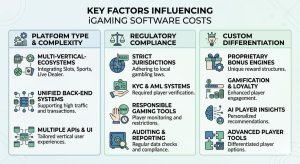
While general cost ranges are useful, the final investment required to launch an iGaming platform can vary significantly. Several operational and technical variables influence the total cost of development and deployment. Understanding these cost drivers helps operators estimate budgets more accurately and avoid unexpected expenses.
Platform Type and Complexity
The complexity of the platform architecture has a direct impact on development cost. A simple online casino with basic slot games requires far less infrastructure than a multi-product gaming ecosystem.
Platforms that include multiple verticals typically require additional integrations and backend systems. These may include:
- Online casino games
- Sports betting platforms
- Live dealer gaming
- Fantasy sports modules
- Skill-based gaming experiences
Each additional vertical requires new APIs, user interface components, payment flows, and regulatory compliance checks. As a result, a multi-product platform can cost significantly more to develop and maintain than a single-product casino platform.
Geographic Market and Regulatory Requirements
The regulatory environment in which an operator plans to launch plays a major role in determining costs. Europe currently dominates the global iGaming market with around 42% market share. This makes it the most mature and regulated online gambling region.
Highly regulated jurisdictions require strict compliance with legal frameworks, which increases both development and operational expenses. Regulated markets often require:
- Advanced KYC and AML systems
- Responsible gambling monitoring tools
- Secure data storage and reporting infrastructure
- Regular compliance audits
- Dedicated legal support
For example, launching in major regulated markets often involves months of licensing procedures and substantial legal costs. Operators entering multiple jurisdictions must also adapt their platform to different regulatory standards.
Custom Features and Platform Differentiation
Many successful gaming operators invest heavily in custom features designed to differentiate their platforms from competitors. These may include:
- Proprietary bonus engines
- Gamification systems
- VIP loyalty programs
- AI-driven player recommendations
- Tournament and leaderboard features
While these features can significantly improve player engagement, they also increase development time and cost. Operators must balance innovation with budget constraints when designing their platforms.
Strategies to Reduce iGaming Software Costs
New operators often reduce costs by adopting strategic approaches to platform development and market entry. Common strategies include:
- Lunching with a white-label platform before building custom software.
- Starting with a limited number of game providers and expanding gradually.
- Operating in flexible licensing jurisdictions before entering stricter regulatory markets.
- Partnering with affiliate marketers instead of relying entirely on paid advertising.
- Using modular platform architecture that allows gradual feature expansion.
These strategies help startups validate their business model while controlling initial investment.
Hidden Costs of iGaming Platforms Most Operators Don’t Expect
When founders research iGaming platform costs, they usually focus on development, licensing, and game integrations. However, experienced operators know that hidden operational expenses often represent a large portion of the total investment.
Ignoring these costs can lead to budget overruns, delayed launches, or even regulatory issues. Below are some of the most common hidden costs that new operators underestimate when launching an online casino or sportsbook:
- Payment processing fees
- KYC and compliance infrastructure
- Game provider revenue share
- Affiliate marketing commissions
- Cloud infrastructure and server scaling
- Fraud prevention and security tools
- Customer support and moderation
- Continuous platform updates
For new operators, the biggest mistake is underestimating operational expenses. Learn more about hidden costs here.
Future Trends Affecting iGaming Software Costs
The cost structure of iGaming platforms continues to evolve as technology advances. Several trends are shaping the future of platform development:
- Artificial intelligence (AI) for fraud detection and player behavior analysis
- Blockchain-based payment systems and decentralized gaming platforms
- Advanced personalization engines that tailor game recommendations and bonuses
- Cloud-native infrastructure designed for high scalability and reduced operational costs
As technology improves, new operators may gain access to more affordable tools while large operators continue investing heavily in proprietary platforms.
Is Building Custom iGaming Software Worth the Cost?
Many operators eventfully face the decision of whether to continue using third-party platforms or invest in proprietary technology. Custom development offers several strategic advantages.
Owning the platform infrastructure allows operators to avoid revenue sharing with third-party providers. It also provides greater control over feature development and product innovation.
However, custom platforms only become cost-effective at scale. For startups with limited budgets, white-label or turnkey platforms usually provide a more practical entry point.
Once the platform achieves steady revenue and user growth, operators may choose to migrate toward proprietary systems.
iGaming Software Development Services for Casino Operators
While many startups begin with white-label platforms, growing operators often require custom iGaming software development to scale their business and differentiate their gaming experience.
Custom platforms allow operators to create unique features, integrate specialized payment solutions, and build scalable infrastructure that supports thousands of concurrent players.
This is where working with an experienced iGaming software development company becomes essential.
Custom iGaming Platform Development
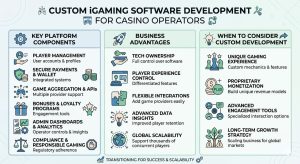
A professional development partner can design and build a complete iGaming ecosystem tailored to an operator’s business model. Custom iGaming platforms typically include:
- Player account management systems
- Secure wallet and payment integrations
- Game provider APIs and aggregation layers
- Bonus engines and loyalty programs
- Admin dashboards and analytics tools
- Responsible gaming and compliance modules
These systems work together to create a stable and scalable gaming environment capable of supporting real-money wagering and large player communities.
Why Businesses Choose Custom iGaming Software
Many gaming companies eventually transition from third-party platforms to custom solutions for several strategic reasons. Custom iGaming platforms provide:
- Full ownership of the platform technology
- Greater control over player experience
- Flexible integrations with new game providers
- Advanced analytics and player retention tools
- Scalable infrastructure for global markets
For operators planning long-term growth, investing in proprietary software can significantly improve operational flexibility and profit margins.
When Operators Should Consider Custom Development
While white-label solutions offer fast market entry, many operators eventually invest in custom development to build differentiated gaming experiences. Custom development is especially valuable for operators who want:
- Unique game mechanics or platform features
- Proprietary monetization systems
- Advanced player engagement tools
- Full ownerships of their platform technology
In such cases, partnering with an experienced development company can help transform a concept into a scalable, production-ready gaming platform.
Red Apple Technologies: iGaming Software Development Partner
For businesses looking to build scalable gaming platforms, Red Apple Technologies provides end-to-end iGaming software development services tailored to the needs of casino operators and gaming startups.
With over a decade of experience in game and application development,we offer specialized expertise in building modern gaming ecosystems designed for performance, security, and player engagement.
Our development services include:
- Custom online casino platform development
- HTML5 casino game development
- Multiplayer gaming infrastructure
- Mobile and cross-platform gaming applications
- UI/UX design for gaming platforms
- Quality assurance and performance optimization
The company works with modern technologies such as Unity, HTML5, and advanced backend frameworks to create high-performance gaming platforms capable of supporting large-scale user activity.
iGaming Development Services Offered
As an experienced iGaming development partner, we provide a range of services covering the entire platform lifecycle, including:
- Custom iGaming platform development
- HTML5 casino game development
- Multiplayer game systems and leaderboards
- UI/UX design for gaming platforms
- Quality assurance and performance testing
- Post-launch maintenance and feature upgrades
Hire iGaming developers for requirements analysis, platform design, development, testing, and long-term support to ensure stable gameplay and reliable platform performance.
Our Technology Capabilities
Modern iGaming platforms require advanced technologies to remain competitive. Development partners often integrate cutting-edge technologies that improve engagement, personalization, and security. Our development teams work with various technologies:
- Unity and HTML5 game engines
- React Native and Flutter for cross-platform apps
- Blockchain and Web3 systems
- Artificial intelligence for player analytics
- AR and VR technologies for immersive gaming experiences
These help operators create scalable and engaging gaming ecosystems that can evolve with the rapidly changing iGaming market.
Flexible Engagement Models
Every gaming business has different technical and operational requirements. Development partners therefore offer flexible collaboration models to support different project types.
- Dedicated iGaming development teams
- Full-cycle custom platform development
- Game production outsourcing
- Long-term platform maintenance and upgrades
This flexibility allows operators to scale development resources based on their project timelines and budget.
Building a Future-Ready iGaming Platform
The iGaming industry is evolving rapidly as new technologies reshape the player experience. Modern platforms increasingly incorporate innovations such as:
- Artificial intelligence for player analytics
- Blockchain-based payment systems
- AR and VR gaming environments
- Advanced gamification and loyalty programs
Building a future-ready platform requires technical expertise, scalable architecture, and ongoing innovation. Working with an experienced development partner allows operators to focus on market growth while ensuring their platform continues to evolve with industry trends.
Why Work With an Experienced iGaming Development Company?
Working with an experienced development partner offers several advantages for operators launching new gaming platforms. Benefits typically include:
- Reduced development time and cost
- Access to experienced game engineers and designers
- Scalable infrastructure for growing player bases
- Reliable project management and delivery timelines
- Post-launch support and feature upgrades
Development partners can also provide flexible engagement models such as dedicated development teams, fixed-cost projects, or ongoing platform support.
Conclusion
The market is projected to grow to about $153.6 billion by 2030, so it’s high time to work on your plan. Launching an iGaming platform requires significantly more than simply integrating a few casino games into a website. Modern platforms rely on complex infrastructure including payment systems, regulatory compliance tools, game aggregators, and scalable cloud hosting.
Depending on the development approach, launching an online casino platform can cost anywhere from $50,000 for a white-label setup to more than $1 million for a fully custom platform.
For most new operators, the optimal approach is starting with a scalable turnkey or white-label solution, validating the business model, and gradually investing in custom technology as the platform grows.
Understanding the full cost structure of iGaming software helps operators plan realistic budgets, choose the right development approach, and build sustainable gaming platforms in an increasingly competitive industry.
To Have A Better Understanding On This Let us Answer The Following Questions
Answer: Mobile compatibility is essential because a majority of online gambling activity now occurs on smartphones. Many operators launch with responsive mobile websites first and later develop dedicated mobile apps once their user base grows.
Answer: The cost of building an iGaming platform depends heavily on the scope of the project, regulatory requirements, and whether you are developing the system from scratch or using a white-label solution.In general:
- White-label platforms: $15,000 – $60,000 initial setup
- Mid-tier custom platforms: $80,000 – $250,000
- Enterprise-level platforms: $300,000 – $1,000,000+
These estimates include core development, UI/UX design, backend systems, and basic integrations. However, operators must also consider ongoing costs, including:
- licensing fees
- payment gateway fees
- customer support operations
- compliance updates
- marketing budgets
For most operators, the total first-year cost of launching an iGaming platform ranges between $120,000 and $500,000 depending on scale.
Answer: Several factors significantly influence the total cost of building an iGaming platform.The biggest cost drivers include:
- Regulatory licensing
Licenses from jurisdictions such as Malta, Curacao, or the UK can cost anywhere from $20,000 to over $100,000 depending on the regulator.
- Game aggregation
Most platforms rely on third-party game providers. Integrating these libraries can cost $10,000 to $50,000 depending on the aggregator and the number of providers.
- Payment processing infrastructure
Payment gateway integration, fraud prevention, and transaction monitoring often require significant development and compliance work.
- Security and compliance
KYC, AML monitoring, and responsible gaming tools are mandatory in many regulated markets.
- Scalability and cloud infrastructure
Large platforms need distributed systems capable of handling thousands of concurrent players.
Because of these factors, platform complexity is the single largest driver of development cost.
Answer: Yes, white-label solutions are usually much cheaper upfront.White-label platforms provide a ready-made infrastructure, including:
- game libraries
- payment integrations
- licensing support
- backend management systems
Typical white-label costs include:
- Setup fee: $10,000 – $50,000
- Revenue share: 10–30%
- Monthly platform fee: $1,000 – $5,000
While white-label solutions reduce initial investment, they often limit:
- customization options
- control over technology
- long-term margins
Custom platforms require higher upfront investment but offer greater flexibility, scalability, and ownership.
Answer: Development timelines vary based on project scope and complexity.Typical timelines include:
- White-label platforms: 2–6 weeks for launch.
- Mid-tier custom platforms: 4–8 months including testing and integrations.
- Enterprise-level platforms: 9–18 months depending on features, compliance requirements, and the number of integrations.
Projects involving multiple jurisdictions, complex payment systems, and large game libraries usually require longer timelines.
Answer: Launching the platform is only part of the investment. Operators must also plan for ongoing operational costs. Key recurring expenses include:
- Game provider revenue share: Many providers charge 10–20% of gaming revenue.
- Payment processing: Payment gateways often charge 2–5% per transaction.
- Server infrastructure: Cloud hosting for large platforms can cost $2,000 – $15,000 per month depending on traffic.
- Customer support: Support teams, CRM tools, and moderation staff add operational costs.
- Marketing and acquisition: Many successful operators spend 30–50% of revenue on marketing, especially in competitive markets.
Ignoring these costs is one of the most common mistakes new operators make.
Answer: Yes, but startups typically begin with leaner approaches.Instead of building a full platform from scratch, many new operators use:
- white-label platforms
- revenue-share partnerships
- smaller game libraries
- niche markets
These strategies reduce the upfront investment while allowing operators to validate their business model.
Once the platform generates consistent revenue, operators often transition toward custom development for greater control.
Answer: There are several strategies operators use to control development costs without compromising quality. These include:
- Using modular architecture
A modular platform allows operators to add features gradually rather than building everything upfront.
- Partnering with experienced development companies
Experienced developers can prevent costly mistakes related to compliance, scalability, and payment integrations.
- Prioritizing core features
Successful platforms typically launch with essential features first and expand over time.
- Choosing the right licensing jurisdiction
Some jurisdictions offer faster and more affordable licensing processes. Working with experienced development partners can significantly reduce both development risk and operational costs.
Get Started
- End-to-End Game & App Development Services
- Flexible Business Models – Project Based or Dedicated Hiring
- 13+ Years of Industry Experience with Global Clientele
- Globally Recognized by Clutch, GoodFirms & DesignRush
Related Blogs
Discover more stories & insights that inspire
The wrong partner doesn’t fail your project on day one. It fails itself slowly through delays, compliance gaps, and missed market windows. In the iGaming industry, your technology partner is...

Online casinos look deceptively simple from the outside: a clean lobby, a few games, a deposit button, and maybe a big welcome bonus. Behind that interface, launching a real online...
Payment processing is one of the most important parts of an iGaming business, yet it is often treated like a quick technical setup rather than a core piece of the...

A game aggregator is not just another software product. For investors, it is better understood as infrastructure: a platform that connects many game providers, delivers content through one system, and...

Launching an online casino or sportsbook requires choosing the right technology foundation. One of the most important decisions operators face is whether to use a white-label platform or build a...

Launching an online casino or sportsbook requires more than technology and game integrations. Operators must obtain a valid iGaming license from a recognized regulator before offering online gambling services. The...

Despite occupying second position after China, the USA still manages to be a superpower in the global game industry. Whether game development or game publishing, the USA continues to shine...
Not long ago, virtual reality was treated as an experimental side project for game studios. Today, immersive technology has become a serious part of the global gaming industry, and Canada...

Evolving into a profitable business worldwide, iGaming as a segment is not just restricted to casino games like slots, roulette, bingo, and poker. It also includes various virtual sports like...

Italy has quietly developed into one of Europe’s most creative mobile game development ecosystems. While the country may not match the scale of mobile gaming markets like the United States...


 Book An Appointment
 WhatsApp