


- Blog
- >
- AI in Retail
- >
- AI in Retail &...
AI in Retail & eCommerce: Personalized Shopping, Smarter Inventory, Better Sales
By now, we all know that AI is fundamentally transforming everything around us, and the retail and e-commerce landscape are among the primary ones to experience it, driving hyper-personalization, automation, predictive analytics, and unprecedented operational efficiency, making it the core of modern eCommerce solutions and a critical edge for competitive brands. This revolution exemplifies the power of AI in retail industry innovation and unlocks new possibilities for customer engagement and operational agility.
Market Growth and Industry Adoption
In 2025, the market for AI in the retail industry is projected to expand from $11.61 billion (2024) to $40.74 billion by 2030, with a compound annual growth rate of 23%. North America leads adoption, but Asia-Pacific is the fastest-growing region. AI adoption has reached 78% of retailers in 2024 (up from just 55% the year before) demonstrating the accelerating need for smarter systems to win over digital consumers. Top brands such as Walmart, Amazon, Target, and Alibaba are using AI in ecommerce models to drive cost savings, revenue growth, and customer satisfaction at scale.
How to Use AI in Ecommerce?
AI adoption in retail and ecommerce is a response to unprecedented challenges: rising expectations, supply chain disruptions, and digital competitors. Here’s how to use AI in ecommerce for a business advantage:
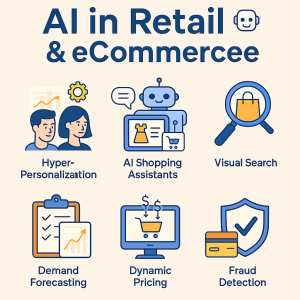
Hyper-Personalization and Predictive Engagement
AI analyzes behavioral, transactional, and contextual data to serve up individualized recommendations and targeted messaging, driving loyalty and lifetime value. For retailers exploring AI in B2B ecommerce, this also means offering tailored digital experiences and predictive ordering to business clients, elevating both conversion and satisfaction.
AI Shopping Assistants and Conversational Commerce
The latest AI-powered bots and chat solutions offer conversational recommendations and guidance from initial search to post-purchase service. By integrating natural language processing, these assistants not only resolve queries but anticipate intent, making AI in retail customer experience seamless.
Visual Search and Image Recognition
Leveraging computer vision, generative AI in retail now enables customers to find products just by uploading pictures or screenshots, making online discovery intuitive, and minimizing friction for shoppers especially on mobile and social platforms.
Intelligent Inventory and Demand Forecasting
Smart forecasting tools, powered by AI, analyze historical trends, seasonal patterns, and even influencer activity to optimize inventory, prevent stockouts, and reduce waste. This has become a foundation of the future of AI in retail for both inventory and logistics planning.
Dynamic Pricing and Competitive Intelligence
AI engines adjust prices based on live demand, competitor activity, and individual customer profiles. Dynamic pricing, once a luxury, is now a must-have in competitive online environments, as it allows for real-time margin management and even personalized discounts.
Fraud Detection and Secure Transactions
AI continually monitors transactions, identifying anomalies and deploying biometric verification, thus keeping business and customer data safe. Security is integral for all businesses, and a reliable AI app development company can craft these safeguards into custom solutions.
Omnichannel AI Experiences
Consumers now expect to transition seamlessly between web, mobile, and physical stores. AI ensures context-driven continuity in recommendations and support, resulting in a truly unified retail journey.
Retail Sustainability and Waste Reduction
AI drives better sustainability outcomes by precisely forecasting demand, optimizing delivery routes, and recommending resource-efficient practices, reducing overall emissions and waste for retailers and online brands.
Generative AI in Retail
Generative AI is revolutionizing content production by creating personalized product descriptions, marketing campaigns, and even AR/VR visualizations in real time. Retailers can now rapidly iterate creative assets, a trend proving vital for web shops competing on speed and engagement.
Real-World Success Stories
- Walmart’s AI inventory system delivered 24% year-on-year growth and dropped stockouts by 30%.
- Amazon’s recommendation engine, a key example of using AI in ecommerce, now drives 35% of all sales.
- Target’s Store Companion chatbot supports both staff and in-store shoppers with AI-driven, context-aware assistance.
- Sephora’s AR try-on platform has reduced returns by 30% and increased conversion rates, exemplifying the value of generative AI in retail experiences.
Consumer Trends and Privacy
- 71% of consumers want generative AI features in their shopping journey, especially digital natives.
- Privacy and trust are paramount, with most shoppers expressing concern about data use. Retailers and their AI partners must ensure transparency and build systems that prioritize customer confidence.
Implementation Challenges
- Data quality and integration remain major hurdles. Many brands need to upgrade infrastructure or partner with an established AI app development company to unlock the full potential of AI.
- Cost and skill gaps challenge smaller retailers, as AI demands continued investment and specialist talent.
- Workforce reskilling is both a necessity and an opportunity, as new roles emerge around customer insight, AI stewardship, and tech-driven marketing.
The Future of AI in Retail
The next era will be defined by agentic, autonomous systems managing most customer service and operational workflows. Synthetic data generation and voice/image-driven commerce will become mainstream, making AI not just a tool but the core engine of retail transformation. Those who invest early, working with expert partners and focusing on customer centric innovation, will shape the global future of AI in retail.
Final Takeaway
The integration of AI in retail industry not only delivers immediate efficiency and profitability gains but also future-proofs businesses for continued disruption. Success lies in working with the right AI app developers, applying AI strategically across the customer journey, and leveraging solutions for both B2C and B2B marketplaces. As ecommerce solutions and AI co-evolve, leaders will emerge by embracing smarter, faster, and more personalized ways to serve today’s and tomorrow’s shoppers.
To Have A Better Understanding On This Let us Answer The Following Questions
Answer: Retailers encounter several key challenges when adopting AI:
- Poor data quality, availability, and accessibility hinder accurate model training.
- Legacy system integration causes bottlenecks and data silos.
- High implementation and maintenance costs strain budgets, especially for small businesses.
- Organizational resistance to change and lack of skilled AI talent create adoption friction.
- Ethical and privacy concerns require transparency and governance frameworks.
Successful AI adoption requires strategic planning, robust data management, workforce training, and transparent customer communication.
Answer: Smaller retailers can strategically leverage AI by:
- Using cloud-based AI platforms to minimize infrastructure costs.
- Partnering with specialized AI app development companies for tailored solutions.
- Focusing on targeted AI applications like chatbots, customer segmentation, or dynamic pricing.
- Prioritizing ROI-driven projects with measurable impacts before scaling AI efforts.
This enables them to compete on customer personalization and operational efficiency without large upfront investments.
Answer: Yes, ethical concerns include data privacy, customer consent, algorithmic bias, and transparency. Retailers must adhere to responsible AI principles by implementing clear data usage policies, conducting regular fairness audits, and making AI decision processes explainable to users and regulators.
Answer: AI helps improve sustainability through better demand forecasting, optimized logistics, waste reduction, and recommending eco-friendly options, contributing to lower environmental impact and enhanced corporate responsibility.
Answer: ROI timelines vary by AI complexity and retailer readiness. Benefits from personalization or automated support can show within months, while advanced initiatives like supply chain optimization may require a year or more. Establishing clear success metrics and continually measuring ROI is crucial for long-term AI success.

Related Blogs
Discover more stories & insights that inspire
Right now, finding an AI development company feels a little like walking into a crowded market where everyone is claiming to have the “next big thing.” Every agency talks about...
From science fiction to our daily assistant, artificial intelligence (AI) has become part of our lives faster than we imagined. A few years ago, businesses discussed AI cautiously. Today, it...

In the past few years, San Francisco has become the center of the modern AI economy, not just because major AI companies are headquartered there but because the city has...
Artificial Intelligence (AI) is literally the powerhouse in every market, including stocks. Today’s lightning-fast stock markets were in much need of innovation for trading activities. In just a few years,...

The real estate industry, once driven by intuition and manual processes, is now undergoing a powerful digital transformation, and Artificial Intelligence is at the heart of it. From predicting property...

Artificial Intelligence (AI) is ushering in a new era of personalized learning, efficient administration, and empowered educators. By now, AI-powered tools have become essential in classrooms globally, from K-12 to...

Esports is the market. It is a multi-billion-dollar global industry, drawing millions of viewers and fostering an elite competitive talent pool across a wide variety of games. As esports matures,...
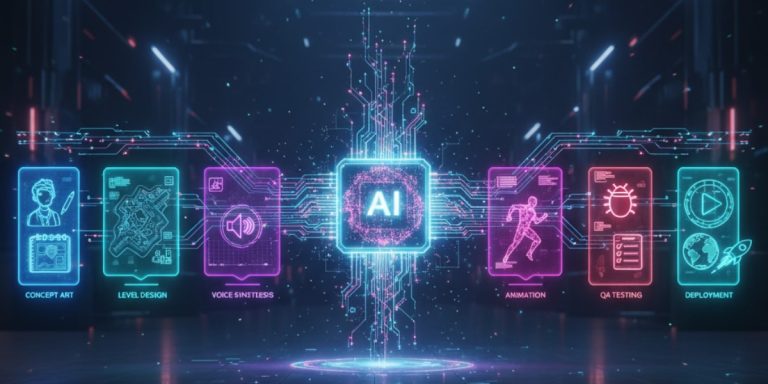
Artificial Intelligence (is becoming) has become the backbone of modern game development and player experience. If you don’t think so, you’re fighting a losing battle. Sure, AI has been in...

Do you remember Orkut, Myspace, and Friendster? Some of the most popular social platforms of the 2000s. It was all about adding friends, sending messages, and staying connected—ahh! The golden...
Just like every other industry, the automotive market is experiencing a boom in AI-powered vehicles. From understanding the possibilities of automated driving to predictive maintenance, what was once science fiction...


 Book An Appointment
 WhatsApp