AI Development Services for Modern Businesses
A lot of businesses are talking about AI right now. Far fewer are using it in ways that actually improve operations, reduce costs, or create measurable growth.
That gap matters.
The companies gaining real value from AI are not necessarily the ones investing the most. They’re the ones applying it with clarity, solving specific business problems instead of chasing trends. That’s where professional AI development services become important; not as a futuristic add-on, not as a marketing buzzword, but as a practical way to make businesses faster, smarter, and more scalable.
AI: Now Beyond an Experiment
A few years ago, many companies treated AI as something experimental. Today, it’s becoming operational.
Customer support systems are being automated. Analytics platforms are predicting user behavior. Internal workflows are becoming faster through AI-assisted decision-making.
According to McKinsey & Company, businesses adopting AI at scale are increasingly reporting measurable improvements in operational efficiency and revenue growth.
What changed is not just the technology itself. It’s the accessibility of implementation. Businesses no longer need massive internal AI research teams to benefit from AI systems. They can work with an experienced AI development company to build solutions aligned with real operational goals.
What AI Development Services Actually Include
AI development is often misunderstood as simply building chatbots. In reality, it covers a much broader range of business applications. Modern AI solutions for businesses may include:
- Intelligent automation systems
- Predictive analytics tools
- AI-powered recommendation engines
- Computer vision applications
- Natural language processing systems
- Workflow optimization platforms
The objective is usually the same: reducing repetitive work while improving speed and accuracy.
AI Is Most Valuable When It Solves Specific Problems
One of the biggest mistakes companies make is trying to “implement AI” without identifying the actual business issue they’re trying to solve. Successful AI adoption is usually much more focused. For example:
- A logistics company may use AI to optimize delivery routes.
- An eCommerce platform may use it to personalize product recommendations.
- A gaming company may use AI to improve player behavior analysis.
The technology matters less than the outcome. That’s why experienced AI development agencies spend time understanding workflows before building solutions.
Automation Is Becoming a Competitive Advantage
Businesses are under increasing pressure to operate faster without constantly increasing costs. AI helps by automating repetitive and time-consuming processes. This includes:
- Customer service workflows
- Data analysis
- Document processing
- Internal reporting systems
The result is not just lower operational cost, but also improved responsiveness. Teams spend less time on manual tasks and more time on strategic work. And over time, that operational efficiency compounds.
AI Improves Decision-Making Through Data
Most businesses already collect enormous amounts of data. The problem is that much of it goes underused. AI systems help organizations process and interpret that data faster than traditional manual analysis methods. Instead of reacting to past trends, businesses can begin to predict future behavior, such as customer churn risks, demand fluctuations, user preferences, and operational bottlenecks. This predictive capability is one reason AI adoption is accelerating across industries.
Personalization Has Become a Business Expectation
Customers increasingly expect personalized experiences. Generic communication and static experiences no longer perform as effectively as they once did. AI enables businesses to personalize recommendations, marketing campaigns, customer interactions, and product experiences.
Platforms like Netflix and Amazon helped normalize this expectation years ago. Now, businesses across industries are following the same direction.
This is where working with an experienced AI technology partner becomes valuable. Personalization at scale requires a strong data infrastructure and carefully designed AI models.
AI Adoption Is Growing Across Industries
Artificial Intelligence is no longer limited to technology companies. Here are a few instances:
- Healthcare organizations use AI for diagnostic support.
- Financial institutions use it for fraud detection.
- Retail businesses use it for inventory forecasting.
- Game studios use it for player behavior analysis and dynamic experiences.
According to IBM, AI adoption among businesses has continued increasing as organizations look for operational efficiency and automation opportunities.
The important point is this: AI is becoming infrastructure, not just innovation.
Why Businesses Work With AI Development Partners
There is a reason we excel in development services when many struggle with emerging tech.
Building AI systems internally can be difficult. It requires:
- Data engineering expertise
- Model training and optimization
- Infrastructure management
- Ongoing monitoring and refinement
For many businesses, assembling all of those capabilities internally is expensive and time-consuming. That’s why companies increasingly rely on external AI development services to accelerate implementation. A strong development partner helps businesses:
- Identify realistic AI opportunities
- Build scalable systems
- Integrate AI into existing workflows
- Optimize models over time
Companies like Red Apple Technologies support businesses with AI-driven solutions tailored to operational and industry-specific needs, helping bridge the gap between AI concepts and real-world execution.
AI Is Not a One-Time Implementation
This is something businesses often underestimate. AI systems improve over time. As more data is collected, models become more accurate. Workflows become more efficient. Predictions become more reliable. That means AI development is rarely a one-time project. It’s an evolving operational system that requires ongoing refinement.
The businesses seeing the strongest results are usually the ones treating AI as a long-term capability rather than a short-term experiment.
The Businesses Moving Early Have an Advantage
AI adoption is still uneven across industries. Some businesses are already integrating AI deeply into daily operations. Others are still evaluating where it fits. That gap creates opportunity.
Early adopters gain efficiency advantages, improve responsiveness, and often operate with lower long-term overhead. Once those operational improvements compound, catching up becomes difficult for competitors.
Final Thought
AI is no longer just a technology trend. For modern businesses, it’s becoming a practical tool for improving efficiency, decision-making, personalization, and scalability. However, successful implementation depends less on the technology itself and more on how intelligently it’s applied.
That’s why choosing the right AI development company or AI technology partner matters so much. The goal isn’t simply to use AI. It’s to use it in ways that create measurable business value.
To Have A Better Understanding On This Let us Answer The Following Questions
Answer: AI development services involve building intelligent systems that automate tasks, analyze data, and improve business operations using artificial intelligence.
Answer: They improve efficiency, automate workflows, enhance decision-making, and personalize customer experiences.
Answer: An experienced AI development company provides technical expertise, scalable infrastructure, and customized solutions aligned with business goals.
Answer: AI is widely used in healthcare, finance, retail, logistics, gaming, manufacturing, and customer service industries.
Answer: An AI technology partner helps businesses plan, develop, integrate, and optimize AI systems for long-term operational improvement.
Get Started
- End-to-End Game & App Development Services
- Flexible Business Models – Project Based or Dedicated Hiring
- 13+ Years of Industry Experience with Global Clientele
- Globally Recognized by Clutch, GoodFirms & DesignRush
Related Blogs
Discover more stories & insights that inspire
Artificial Intelligence (AI) is literally the powerhouse in every market, including stocks. Today’s lightning-fast stock markets were in much need of innovation for trading activities. In just a few years,...
The real estate industry, once driven by intuition and manual processes, is now undergoing a powerful digital transformation, and Artificial Intelligence is at the heart of it. From predicting property...

Artificial Intelligence (AI) is ushering in a new era of personalized learning, efficient administration, and empowered educators. By now, AI-powered tools have become essential in classrooms globally, from K-12 to...

Esports is the market. It is a multi-billion-dollar global industry, drawing millions of viewers and fostering an elite competitive talent pool across a wide variety of games. As esports matures,...
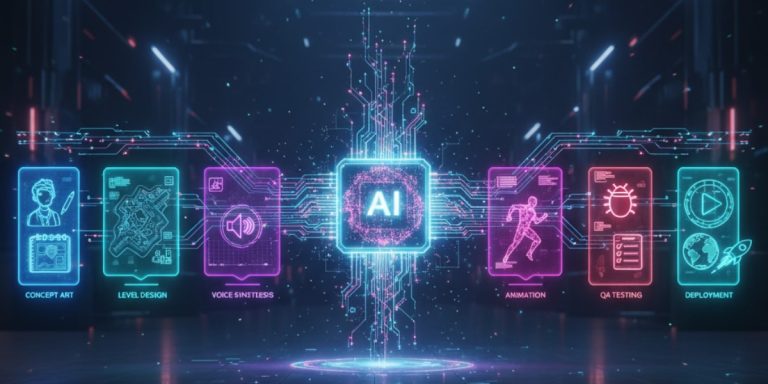
Artificial Intelligence is becoming has become the backbone of modern game development and player experience. If you don’t think so, you’re fighting a losing battle. Sure, AI has been in...

Do you remember Orkut, Myspace, and Friendster? Some of the most popular social platforms of the 2000s. It was all about adding friends, sending messages, and staying connected—ahh! The golden...

By now, we all know that AI is fundamentally transforming everything around us, and the retail and e-commerce landscape are among the primary ones to experience it, driving hyper-personalization, automation,...

Just like every other industry, the automotive market is experiencing a boom in AI-powered vehicles. From understanding the possibilities of automated driving to predictive maintenance, what was once science fiction...

AI is giving the banking sector a significant boost, powering the front, middle, and back-end, and improving both internal operations and customer-centric applications. Whether it is about regulatory compliance, managing...
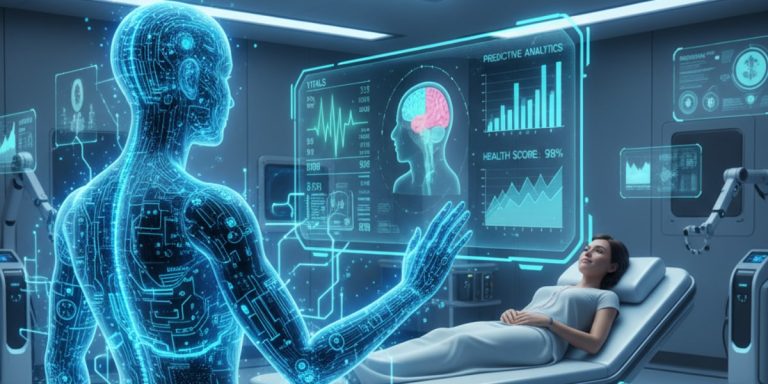
Artificial Intelligence (AI) is promising a future where medical care is more precise, accessible, and efficient. The benefits of artificial intelligence in healthcare have been proven across medical imaging accuracy,...


 Book An Appointment
 WhatsApp